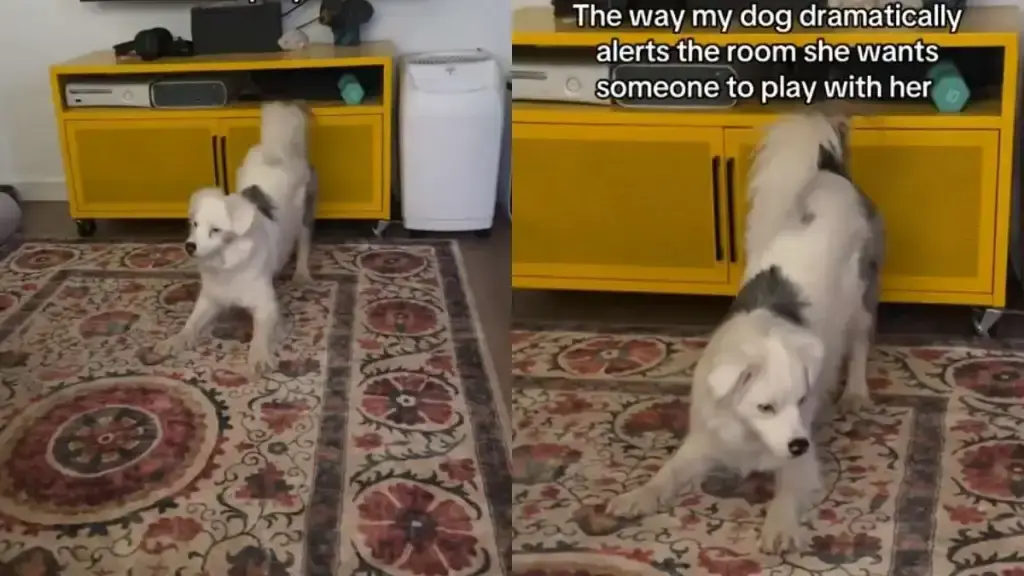
The Australian Shepherd Who Turns Playtime Into a Performance
How Dramatic Gestures Help Dogs Communicate
A rescued Australian Shepherd named Luna has taken to the living room of her new home in Australia to announce her desire for play with a theatrical flair that has captured the attention of her owners and their friends. The dog, who was adopted from a shelter, uses a combination of dramatic body language and a hopeful stare to signal that she is ready for a game of fetch or tug‑of‑war.
Latest news
 Man Saves Puppies from Well, Then Cleans Up the Mess
 A Grieving Pit Bull Finds New Purpose After Adopting An Orphaned Puppy
 Joyful Reunion Brings Tears to a Young Girl After Two Months Apart
 A Devoted Pet Owner Finds Hope After Tragedy Strikes in Florida
Luna’s owners first noticed her unique approach when they posted a short video on social media. In the clip, the dog positions herself in the center of the living room, lifts her tail, and then tilts her head as if addressing an unseen audience. Her eyes lock on the camera, and she wags her tail in a rhythm that seems almost choreographed. The owners describe the moment as „the most dramatic play invitation we’ve ever seen from a dog.”
The behavior is not uncommon among dogs, but Luna’s performance is distinct. While many dogs simply bark or paw at toys to signal their desire for play, Luna’s theatrical display includes a series of specific gestures. She first raises her front legs, then slowly backs away, creating a sense of anticipation. Her ears perk up, and she tilts her head to the side, as if listening for a response. When the owners finally give her a toy, Luna’s excitement is palpable, and she immediately engages in a vigorous game that leaves everyone in the house laughing.
Can Other Dogs Learn to Play Like Luna?
The owners believe that Luna’s dramatic play cues may stem from her background as a rescue. „She was in a shelter for a few months before we adopted her,” says owner Sarah Thompson. „She’s learned to use every tool at her disposal to get what she wants. Her theatricality is her way of making sure she’s noticed.” The dog’s behavior has also sparked interest among other pet owners, who have begun to experiment with similar gestures to encourage playtime with their own dogs.
Dogs rely heavily on body language to communicate with humans and other animals. A raised tail, a wagging tongue, and a focused stare are all signals that a dog is friendly and eager to interact. In Luna’s case, the combination of these signals with a deliberate pacing creates a clear, unmistakable message. „When she does that, it’s like she’s saying, ‘I’m ready, and I want you to pay attention,’” explains Thompson. „It’s a very effective way to get the game started.”
Veterinary behaviorists note that such dramatic displays can also serve to reduce anxiety. By engaging in a predictable routine—positioning herself, making eye contact, and then offering a toy—Luna may be reinforcing her sense of control in a new environment. „Dogs often use exaggerated signals to manage their stress,” says Dr. Emily Nguyen, a canine behavior specialist. „Luna’s performance could be her way of saying, ‘Everything’s fine, I’m in charge, and let’s play.’”
Frequently Asked Questions
Many pet owners wonder whether they can teach their dogs to use similar gestures to request playtime. The answer is yes, but it requires patience and consistency. „Start by rewarding your dog with treats whenever they make eye contact or use a particular gesture,” suggests Nguyen. „Over time, they’ll associate the gesture with positive outcomes, and it will become a natural part of their communication.”
Owners also emphasize the importance of timing. „If you respond immediately when Luna signals, you reinforce the behavior,” says Thompson. „Delaying the response can confuse the dog and make the gesture less effective.” By keeping the reward immediate and the interaction consistent, other dogs can learn to use their own unique signals to initiate play.
The popularity of Luna’s performance has led to a small online community of pet owners sharing videos of their own dogs’ dramatic play cues. While the trend is still in its early stages, it highlights the growing interest in canine communication and the ways dogs adapt their behavior to engage with humans.
Content written by Santanu Das for galore-pets.com editorial team, AI-assisted.