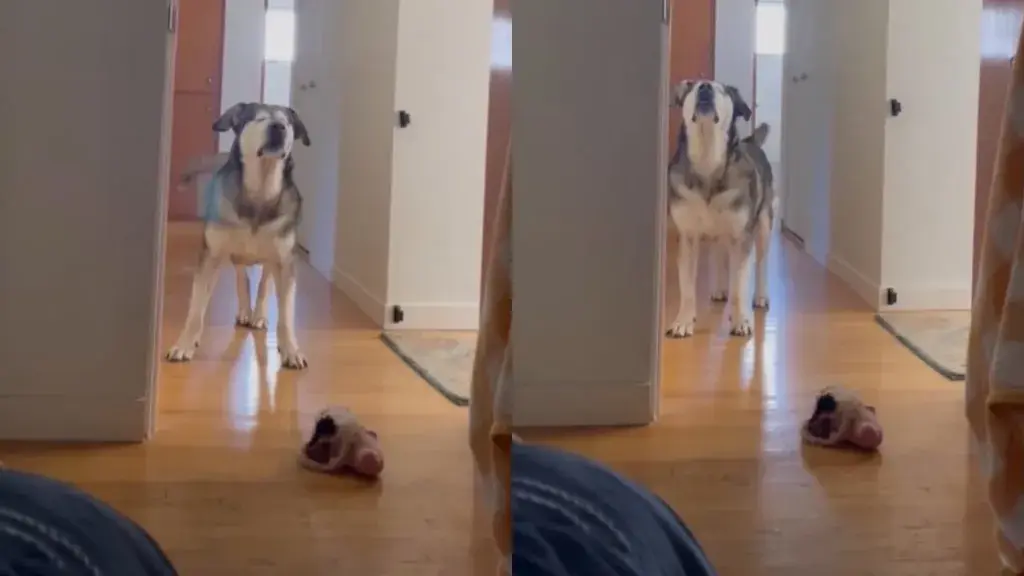
Senior Blind Dog Stomps Until Mom’s Boyfriend Gets Out of Bed Because His Day Can’t Wait
How Does a Blind Dog Know When to Stomp?
A Siberian Husky named Horace, who is blind, has developed a unique morning routine to ensure his owner’s boyfriend wakes up on time. Living in a home where Horace relies on routine and sound, the dog waits in the hallway each morning and begins stomping his feet if the boyfriend stays in bed too long. The behavior, captured in an Instagram video, shows Horace standing patiently before escalating to gentle but persistent stomping until the man rises. The clip, shared by Horace’s owner, highlights how the dog adapts to his blindness by using vibration and timing to communicate needs. Horace’s actions are not random; they stem from a deep understanding of household rhythms and a desire to start the day together. His stomping serves as a non-vocal signal, leveraging his heightened sense of touch and awareness of floor vibrations to get attention without barking or whining.
Latest news
 Rescue Dog Shows Gratitude to Every Person Helping Her Heal
 Family Adopts Terminally Ill St. Bernard After Her Human Passes Away
 Neighbors Take Action After Town Ignores Abused Dog
 Retired Firefighter Reunited with Lost Dogs During Live Interview
This method allows him to remain calm while effectively prompting a response, showing how dogs with sensory limitations can innovate to maintain connection and routine. The video quickly gained attention online for its heartwarming display of loyalty and ingenuity, with viewers praising Horace’s determination and the bond he shares with his human family.
What Does This Say About Dog-Human Communication?
Horace relies on internal timing and environmental cues rather than sight to know when to act. His owner explains that Horace has learned the household’s morning schedule through repetition, associating certain sounds or silences with the boyfriend’s usual wake-up time. When that expected pattern is disrupted, Horace responds by stomping to restore the rhythm. This behavior reflects canine cognitive strength in pattern recognition and routine adherence, especially in dogs who compensate for vision loss with heightened auditory and tactile awareness. Experts note that blind dogs often develop alternative strategies to navigate their world, using vibrations, smells, and memory to interpret situations. Horace’s stomping is not anxiety-driven but purposeful—a learned communication tool that fits within his need for predictability and social engagement. His ability to adapt demonstrates resilience and emotional intelligence, proving that disability does not diminish a dog’s capacity to understand and influence their environment.
Horace’s morning ritual reveals how deeply dogs attune themselves to human habits, even when they cannot see them. His stomping is a form of intentional signaling, showing that dogs can invent specific behaviors to convey needs when traditional cues like barking or nudging aren’t sufficient or preferred. This aligns with research indicating that dogs modify their communication based on what works with specific humans, tailoring actions to individual responses. In Horace’s case, stomping proved effective because it produces a distinct vibration the boyfriend feels through the floor, making it impossible to ignore. The behavior also underscores the emotional depth of the dog’s motivation—not just to get breakfast or go outside, but to share the start of the day with his chosen person.
Such actions reinforce the idea that dogs are not passive recipients of care but active participants in shaping daily interactions, using creativity and observation to strengthen bonds.
Why does Horace stomp instead of bark or whine? Horace likely chose stomping because it creates a noticeable vibration through the floor, which is harder to ignore than sound alone, especially if the boyfriend is a deep sleeper. It also allows him to communicate calmly without raising his voice.
Frequently Asked Questions
Is Horace’s behavior a sign of anxiety or stress? No, his stomping appears to be a learned, purposeful routine tied to household timing, not distress. He stops once the boyfriend gets up, indicating the goal is achieved, not ongoing unease.
Can other blind dogs develop similar behaviors? Yes, blind dogs often adapt by using touch, sound, and memory to communicate. With consistent routines and responsive humans, they may invent unique signals like Horace’s to express needs or maintain connection.