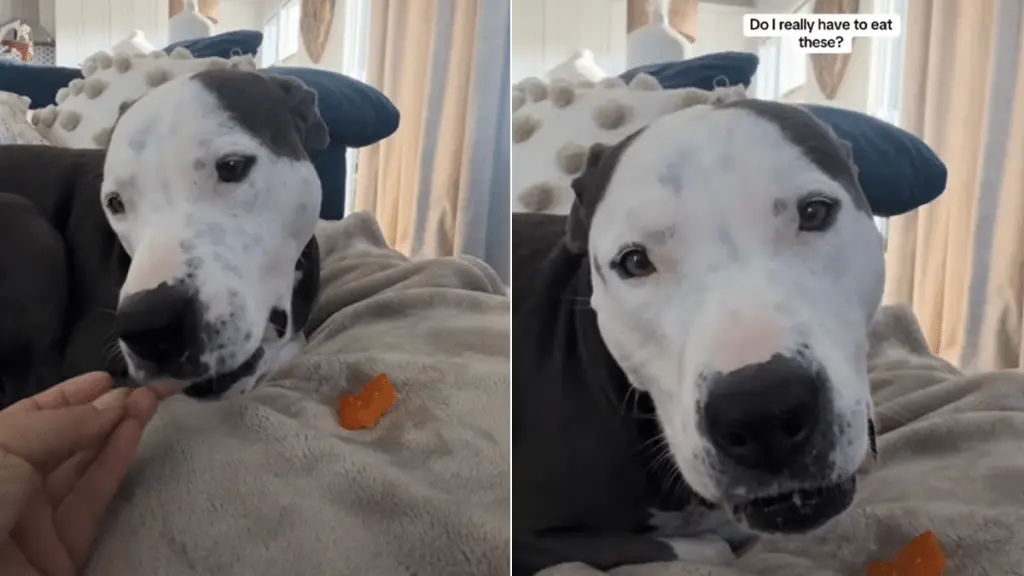
Pit Bull Violet’s „No” to the New Healthy Treat
Why the Switch Matters for Pit Bulls
A young Pit Bull named Violet was filmed in her backyard on Tuesday, when her owner swapped her usual kibble-based treats for a homemade, low‑fat alternative. The dog’s puzzled look made the clip go viral, sparking a debate about the best way to keep pets healthy without losing their enthusiasm.
Latest news
 Rescue Dog Shows Gratitude to Every Person Helping Her Heal
 Family Adopts Terminally Ill St. Bernard After Her Human Passes Away
 Neighbors Take Action After Town Ignores Abused Dog
 Retired Firefighter Reunited with Lost Dogs During Live Interview
The owner, who prefers to remain anonymous, explained that the switch was prompted by Violet’s recent weight gain. „She’s a bit too plump for a Pit Bull,” she said. „I wanted to give her something that would still satisfy her cravings but with fewer calories.”
The new treat was a simple mix of boiled chicken, carrots, and a dash of low‑salt broth. Violet was offered a single piece, but her face froze mid‑bite. Her ears flattened, and her tail stopped wagging. She then turned her head toward the kitchen, as if hoping for the old, higher‑calorie biscuits she had been eating for years.
Can Owners Make the Transition Smooth? (How)
Veterinary experts say that many dogs resist healthier options because they are used to the taste and texture of traditional treats. „Dogs are creatures of habit,” said Dr. Elena Ramirez, a veterinary nutritionist. „When you change their diet, you need to do it gradually and keep the flavor profile similar.”
Pit Bulls are known for their muscular build and high energy. If their diet is not balanced, they can quickly become overweight, which leads to joint problems and heart disease. Owners often look for low‑fat, high‑protein options to curb weight gain. However, the transition can be challenging. „You need to keep the treats appealing,” Dr. Ramirez added. „Add a little natural sweetener or a splash of beef broth to make them more enticing.”
The viral clip also highlighted how dogs communicate dissatisfaction. Violet’s expression—ears back, tail still, eyes narrowed—indicated that she was not only rejecting the new treat but also feeling a sense of loss. „It’s like she’s saying, ‘I miss the old one,’” the owner observed. „She’s not just sad; she’s actively refusing.”
What Happens if the Dog Keeps Refusing?
Owners can ease the change by mixing the new treat with the old one for a few days. „Start with a ratio of 75% old to 25% new,” suggested Dr. Ramirez. „Then gradually shift to 50/50, and finally to 100% new.” She also recommends incorporating the new treat into daily meals, so the dog associates it with the routine of eating.
Another strategy is to use a treat dispenser that releases the food slowly. „The pacing helps the dog focus on the flavor rather than the quantity,” Dr. Ramirez said. „It also reduces the urge to gulp down the whole piece.”
Frequently Asked Questions
The owner tried a small change, adding a pinch of honey to the new mix. Violet’s reaction was slightly better, but she still seemed hesitant. „I think she needs more time,” the owner concluded. „She’s a stubborn dog, but I’ll keep trying.”
If a dog consistently rejects healthier treats, it could signal a problem with the food’s texture or taste. In some cases, medical issues such as dental pain or gastrointestinal upset can cause reluctance. „If the refusal persists, a vet visit is warranted,” Dr. Ramirez advised. „They can rule out any underlying health concerns.”
For owners, the lesson is to balance nutrition with enjoyment. „Dogs deserve good food that keeps them healthy, but they also deserve treats that bring them joy,” the owner said. „It’s a learning process for both of us.”