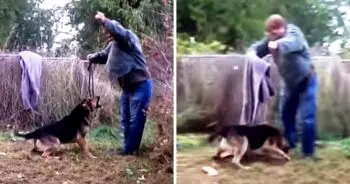
Living Chained Outside For Years
A Dangerous Misconception Of Canine Behavior
Alex, a purebred German Shepherd, spent his entire life tethered outdoors after receiving an unfair and dangerous reputation as an aggressive guard dog. Confined to a heavy chain by his former owner, the dog endured complete isolation, severe neglect, and a profound lack of positive human socialization throughout his formative years.
Latest news
 Rescue Dog Shows Gratitude to Every Person Helping Her Heal
 Family Adopts Terminally Ill St. Bernard After Her Human Passes Away
 Neighbors Take Action After Town Ignores Abused Dog
 Retired Firefighter Reunited with Lost Dogs During Live Interview
Living in these harsh conditions shaped the canine's behavior significantly. Whenever anyone approached his territory, the German Shepherd would lunge aggressively. This hostile reaction reinforced the dangerous label placed upon him by his community and owners.
Can Traumatized Guard Dogs Ever Truly Recover?
Labels often dictate how animals are treated by society. In Alex's case, the harsh categorization of being a vicious killer guard dog sealed his fate outdoors. People avoided him, and his owner eventually abandoned proper care, leaving the animal chained indefinitely.
Experts explain that dogs subjected to lifelong chaining frequently develop severe defensive aggression. This reaction stems from constant fear rather than an inherent vicious nature. When well-meaning rescuers attempted to intervene and free the animal from his heavy restraints, the traumatized dog immediately lunged at them, proving that fear was driving his actions.
Frequently Asked Questions
Rehabilitating an animal that has endured a lifetime of isolation requires immense patience, professional training, and specialized care. While the initial rescue attempt resulted in aggression, animal behaviorists believe that patience and proper desensitization can eventually break down the walls built by years of neglect.
The future for Alex remains uncertain, but his story highlights the devastating impact of premature labeling. Animal welfare advocates continue to push for stricter anti-tethering laws to prevent similar tragedies. They emphasize that environmental factors, rather than innate malice, usually dictate how a guard dog reacts to human presence.