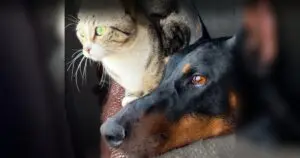
Kitten Adopted by Doberman Develops Distinctly Canine Behaviors
Unlikely Bonds Form Through Shared Space
A Doberman named Diesel recently took in a stray kitten found in his owner’s shed. The large dog quickly bonded with the small feline, creating an unlikely pair. This unexpected friendship has resulted in the kitten mimicking several dog-like habits. The story highlights how cross-species bonds can form under specific circumstances.
Latest news
 Rescue Dog Shows Gratitude to Every Person Helping Her Heal
 Family Adopts Terminally Ill St. Bernard After Her Human Passes Away
 Neighbors Take Action After Town Ignores Abused Dog
 Retired Firefighter Reunited with Lost Dogs During Live Interview
Diesel initially approached the situation with caution. As a Doberman, he possessed instincts that often suggest wariness toward smaller animals. However, the discovery of multiple stray kittens changed his demeanor. He became deeply fascinated by the new arrivals. Instead of hissing or hiding, the kitten stayed close to the dog. This proximity allowed for rapid socialization between the two animals.
The environment played a crucial role in this development. The shed provided a confined space where both animals could interact safely. Diesel acted as a protector and guide for the kitten. Over time, the kitten began copying the dog’s movements. It started sleeping in similar positions and responding to cues meant for Diesel. These behaviors indicate a strong social bond. The kitten views the Doberman as its primary reference point for social interaction.
Does Cross-Species Parenting Change Feline Instincts?
Experts note that early exposure is key to such friendships. When animals are introduced during their critical socialization period, they often accept each other easily. Diesel’s patient nature facilitated this process. He did not chase or startle the kitten. Instead, he allowed the young cat to approach him on its own terms. This gentle introduction prevented fear-based reactions. The result is a companion that behaves more like a puppy than a typical cat.
The phenomenon raises questions about animal behavior. Kittens raised by dogs often lose some standard feline traits. They may bark instead of meow or play fetch. In this case, the kitten exhibits specific canine mannerisms. It follows Diesel closely and mirrors his body language. This adaptation suggests that social learning overrides innate species-specific behaviors. The kitten’s identity is now shaped largely by its canine guardian.
Frequently Asked Questions
Owners report that the dynamic remains stable. Diesel continues to treat the kitten as part of his pack. There have been no signs of aggression or confusion. The kitten thrives in this arrangement, showing no desire to revert to solitary behavior. This case serves as a reminder that animal relationships are fluid. They are not strictly bound by biological categories.
How did the kitten end up with the Doberman? The kitten was one of several strays found inside the owner’s shed. Diesel, the resident Doberman, befriended the group. One kitten remained closest to him, forming a strong bond.
Will the kitten behave like a dog permanently? The kitten has already adopted several dog-like habits. These behaviors are likely to persist due to early socialization. It may continue to mimic canine actions throughout its life.