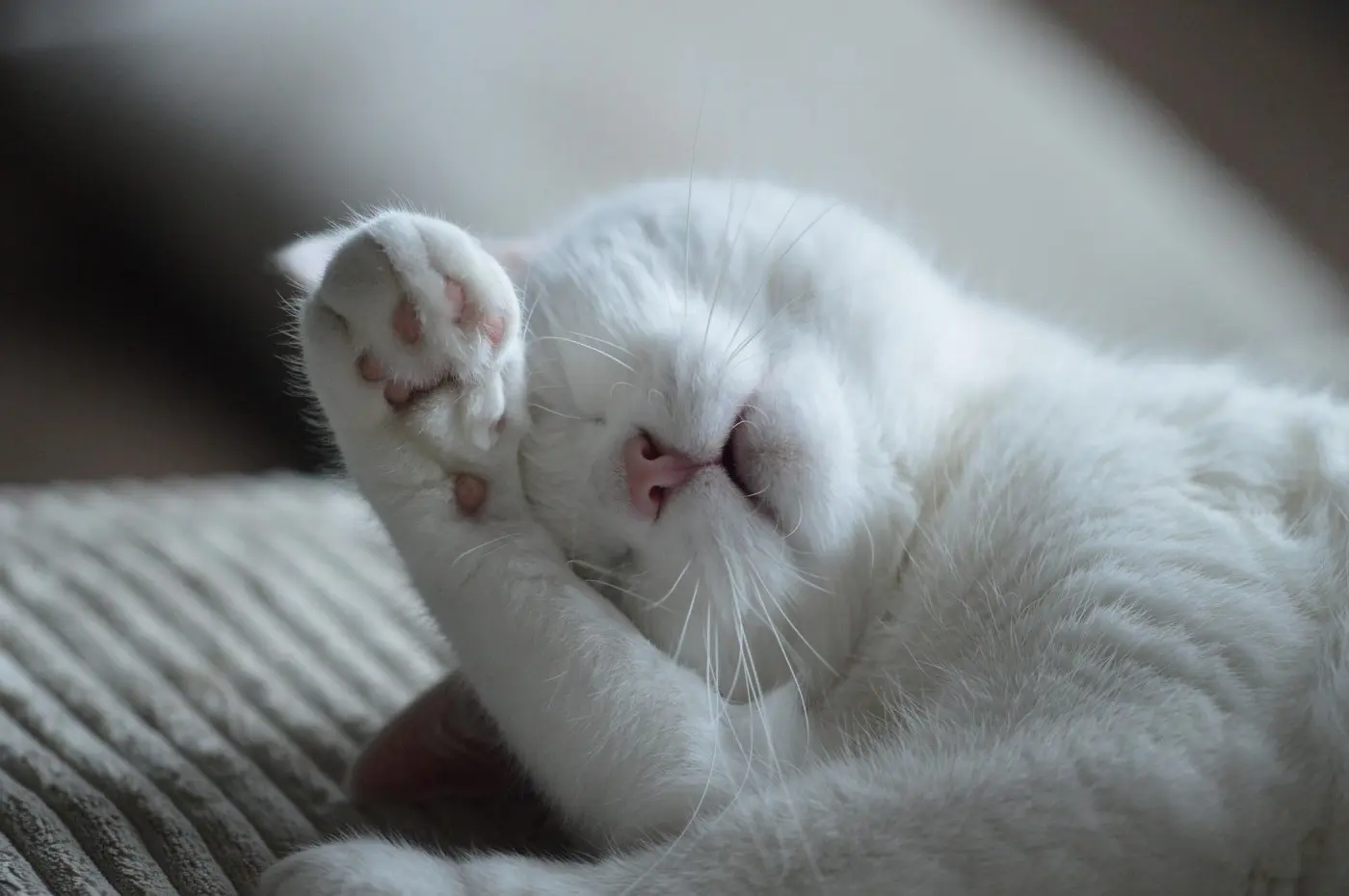
When Your Cat Sleeps With Its Paw Over Its Face, Here's What It Means
Experts suggest it’s a self-soothing action
Finding your cat curled up with a paw delicately placed over its face is a moment that melts the heart of any pet owner. This adorable pose is common among felines and often observed during their frequent naps. While it looks purely charming, there are practical reasons behind this behavior rooted in feline instincts and comfort needs. Cats sleep for up to 16 hours a day, making sleep positions a significant part of their routine. Covering their face with a paw helps block out light and creates a sense of security, mimicking the feeling of being tucked away in a safe den. This gesture can also help retain body heat, especially around the nose and ears, which are sensitive to temperature changes.
Latest news
 Walmart's Festive Cat Tree Features Reindeer Antlers and Gold Star Topper
 Healthy Pumpkin Treats for Dogs: 7 Top Picks
 Anthropologie’s Clear Acrylic Pet Gate Keeps Pets Out Without Ruining the Room
 5 Best Peanut Butter Dog Treats
Experts suggest it’s a self-soothing action, similar to how humans might hug a pillow or pull a blanket over their head. Why Do Cats Choose This Specific Sleeping Pose? The paw-over-face position is not random; it reflects a cat’s need for control over their environment even while resting. By shielding their eyes, they reduce visual stimuli, allowing for deeper, uninterrupted sleep. This behavior is especially common in cats that are naturally alert or easily startled. It also protects their delicate facial whiskers and nose from accidental bumps during sleep. Observations show that cats in multi-pet households or busy homes are more likely to adopt this pose, suggesting it serves as a coping mechanism for overstimulation. Is This Behavior a Sign of Deep Trust? When a cat exposes its vulnerable face while sleeping, it indicates a high level of comfort and trust in its surroundings.
The act of covering the face, paradoxically
The act of covering the face, paradoxically, shows they feel safe enough to let their guard down—just enough to rest deeply. Veterinarians note that cats who frequently sleep in this manner often exhibit other relaxed behaviors, such as slow blinking or kneading. It’s a subtle signal that your cat views your home as a sanctuary, not just a territory. Frequently Asked Questions Do all cats sleep with their paw over their face at some point? Yes, nearly all cats display this behavior during their lifetime, though frequency varies by individual temperament and environment. Should I be concerned if my cat suddenly stops doing this? Not necessarily; changes in sleep posture can be normal, but if accompanied by lethargy or appetite loss, consult a vet. Can I encourage my cat to sleep this way?
You can’t train a cat to adopt specific poses, but providing a quiet, warm, and safe sleeping space increases the likelihood of relaxed, secure sleep behaviors.
Content written by Amanda OBrien for galore-pets.com editorial team, AI-assisted.