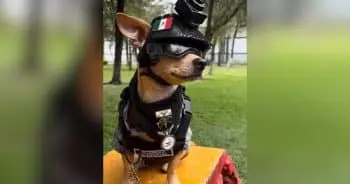
Tiny Chihuahua Enlists in Mexico's National Guard Search and Rescue Unit
Can a Small Dog Make a Big Difference in Rescue Missions?
A 13-month-old Chihuahua named Comando has officially joined Mexico's National Guard as a search and rescue trainee, despite his diminutive size. Weighing just 15 pounds and standing only 8 inches tall, the small dog reported for duty at a recent training session alongside much larger canine units typically assigned to such demanding roles. His enlistment marks an unusual addition to the force, challenging conventional expectations about what constitutes a capable rescue animal.
Latest news
 Rescue Dog Shows Gratitude to Every Person Helping Her Heal
 Family Adopts Terminally Ill St. Bernard After Her Human Passes Away
 Neighbors Take Action After Town Ignores Abused Dog
 Retired Firefighter Reunited with Lost Dogs During Live Interview
Comando's participation stems from a specialized program exploring whether smaller breeds can contribute effectively to disaster response efforts, particularly in accessing tight spaces unreachable by larger dogs. While traditional search and rescue units rely on breeds like German Shepherds or Belgian Malinois for their strength and endurance, trainers are evaluating Comando's agility, keen senses, and ability to navigate rubble or collapsed structures where bigger animals cannot fit. His handlers report he shows strong focus during drills, responding well to commands and displaying enthusiasm for scent-tracking exercises designed to simulate real-world scenarios.
What Happens Next for Mexico's Tiniest Recruit?
Trainers acknowledge skepticism about Comando's physical limitations but emphasize his potential value in specific situations, such as locating victims in confined voids after earthquakes or building collapses where larger dogs might struggle to maneuver. They note that his lightweight frame allows him to traverse unstable debris without risking further collapse, a critical advantage in unstable environments. Early assessments suggest his hearing and olfactory capabilities remain sharp despite his size, key traits for detecting human presence under wreckage. The National Guard has not disclosed specific timelines for his potential deployment but confirms ongoing evaluation of his progress in controlled training environments.
If Comando continues to meet performance benchmarks, he could become part of a pilot initiative integrating smaller canines into specialized search teams, potentially influencing future recruitment criteria across Latin American disaster response units. His story has already drawn attention from animal behaviorists and emergency management experts interested in alternative approaches to urban search and rescue. Regardless of his eventual field assignment, Comando's presence highlights the military's willingness to innovate by reassessing traditional assumptions about canine capabilities in high-stakes operations.
What specific tasks is Comando being trained to perform? Comando is undergoing training in scent detection, agility courses simulating rubble navigation, and obedience drills focused on responding to handler commands in high-distraction environments designed to mimic disaster zones.
Frequently Asked Questions
How does his size compare to typical National Guard search and rescue dogs? At 15 pounds and 8 inches tall, Comando is significantly smaller than standard breeds like German Shepherds, which often weigh 50-90 pounds and stand 22-26 inches at the shoulder, making him roughly one-fifth the size of conventional units.
Will Comando participate in actual rescue operations soon? No immediate deployment is planned; he remains in the evaluation phase, with trainers assessing his suitability through controlled exercises before any consideration for real-world mission involvement.