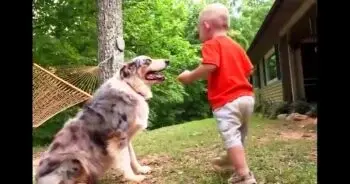
Tennessee Parents Terrified After Puppy Lunges at Toddler, Then Spot Baby’s Footprint
How a Playful Pup Turned Into a Near‑Miss
Bryan and Alicia Holloway of Franklin, Tennessee, were watching their 18‑month‑old son, Bryson, play in the backyard with their Australian Shepherd puppy, Shilou, on Saturday afternoon. The family thought the young dog was gentle and that the toddler was safe. Their relief turned to panic when Shilou suddenly lunged at Bryson, prompting the parents to intervene just in time.
Latest news
 Rescue Dog Shows Gratitude to Every Person Helping Her Heal
 Family Adopts Terminally Ill St. Bernard After Her Human Passes Away
 Neighbors Take Action After Town Ignores Abused Dog
 Retired Firefighter Reunited with Lost Dogs During Live Interview
The incident unfolded while the Holloways let Bryson explore the yard with Shilou under loose supervision. The puppy, still learning boundaries, misread the toddler’s movements and charged, knocking the child to the ground. Quick reflexes saved Bryson from serious injury, but the scare left the parents shaken. „We always believed Shilou was a sweet, well‑behaved pup,” Alicia said. „Seeing him snap at our son was terrifying, and we realized we’d been too relaxed about supervision.” Experts say that even well‑trained puppies can act on instinct, especially when excited or overstimulated.
Animal behaviorists explain that Australian Shepherds are high‑energy dogs that thrive on activity. When a young dog like Shilou is still developing impulse control, sudden movements by a toddler can trigger a chase response. „Puppies often interpret a toddler’s sudden crawl or stand‑up as a game invitation,” noted Dr. Karen Mitchell, a veterinary behaviorist in Nashville. „Without consistent training and close oversight, the dog may act before the owner can intervene.” The Holloways had previously let Shilou and Bryson interact, assuming the dog’s gentle nature would protect the child. After the incident, they immediately consulted a local trainer to reinforce basic commands and to establish a safe distance during play.
Will Parents Need to Rethink Backyard Play for Kids and Dogs?
The family also discovered a small, muddy footprint near where Bryson fell—a reminder of the toddler’s resilience. „Seeing that tiny footprint reminded us how fragile and strong our child is at the same time,” Bryan reflected. The parents now enforce a rule: the puppy must be on a leash or in a crate while Bryson is unsupervised, and they schedule daily training sessions to reinforce calm behavior.
The Holloways’ experience raises a broader question for families with young children and pets: how can households balance safe interaction with the natural curiosity of both? Pediatricians advise that children under two should never be left alone with any animal, no matter how docile. Similarly, dog trainers recommend that puppies receive „impulse control” training before they share space with toddlers. In many states, child‑safety guidelines now include pet interaction protocols, encouraging parents to keep play sessions brief, supervised, and on neutral ground. The Holloways plan to redesign their yard with a fenced pet area, allowing the dog to enjoy space without posing a risk to their son.
The incident has prompted the Holloways to become advocates for responsible pet ownership. They intend to share their story at local community meetings, hoping other parents will adopt stricter supervision measures. While Bryson escaped serious harm, the episode serves as a cautionary tale about the unpredictable nature of young animals and the importance of constant vigilance.
Frequently Asked Questions
Can an Australian Shepherd be safe around toddlers? Yes, with proper training and supervision, Australian Shepherds can coexist safely with children. However, their high energy and herding instincts require consistent boundaries and early socialization.
What immediate steps should parents take after a dog lunges at a child? First, ensure the child is unharmed and seek medical attention if needed. Then, separate the dog, calm both parties, and assess the situation with a professional trainer or veterinarian to prevent recurrence.
How can families prevent similar incidents? Maintain constant adult supervision, keep puppies on a leash or in a confined area during child play, and invest in obedience training focused on impulse control and calm behavior around kids.