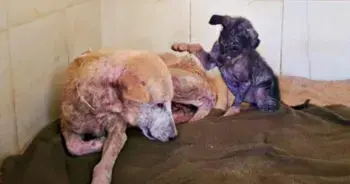
Sickly Puppy Uses All Her Strength to Tell Mom It Will Be All Right
From the Streets to Sanctuary
A fragile puppy named Lily was found trembling on a busy city street last week. She had barely enough energy left to sit up. With her eyes wide, she stared at a passing dog that turned out to be her mother. The sight moved onlookers, but it was Animal Aid volunteers who made the difference. They carried Lily into their shelter, where she received immediate care.
Latest news
 The Mystery Behind Your Cat’s Sudden Shift From Licking To Biting
 Tiny Gray Kitten Rescued From Busy New York Construction Site
 The Resilient Mother: A Cat and Her Five Kittens Face Life‑Saving Struggle Behind a Nail Salon
 Tiny Tuxedo Kitten Becomes Viral Sensation for Vocalizing During Mealtime
Street animals suffer from hunger, lack of shelter, and contaminated water. In the city, thousands of dogs and cats roam without basic needs. Animal Aid tackles this crisis by feeding, sheltering, and rehabilitating stray animals. Their team works day and night to rescue those in distress and provide medical treatment.
When Lily was brought into the shelter, she was emaciated and weak. The team administered fluids, antibiotics, and a warm bed. Within days, her condition improved. „Seeing her struggle to sit up and then hear her mother’s bark was heartbreaking,” said Maria Torres, Animal Aid’s director. „It reminds us why we do this work.” The organization has rescued over 1,200 animals in the past year, with a 90% success rate for those treated for infections or malnutrition.
Animal Aid offers a comprehensive program. First, a rapid assessment determines medical needs. Then, a tailored care plan is created, including nutrition, vaccination, and behavioral training. Once healthy, animals are placed in foster homes or adopted. The shelter’s staff also runs educational workshops for the community, teaching responsible pet ownership and the importance of spaying and neutering.
Can We Protect More Strays?
The rescue of Lily highlights a larger question: how can we reduce the number of animals left to fend for themselves? Many people believe that rescue alone is enough, but prevention is equally vital. Animal Aid partners with local municipalities to increase access to free food and water stations. They also lobby for stricter animal cruelty laws and better enforcement.
Volunteer programs play a key role. „We rely on volunteers to help with daily tasks,” Torres explained. „Without them, we could not keep up with the influx of animals, especially during the winter months.” The organization also offers low-cost spaying and neutering clinics, aiming to cut down on future strays.
The future of street animal welfare depends on community involvement. „Every donation, every volunteer hour, and every responsible pet owner can change a life,” Torres added. „Lily’s story is a testament to what compassion can achieve.”
Frequently Asked Questions
The rescue and recovery of Lily bring hope. While many animals still face hardships, programs like Animal Aid’s demonstrate that coordinated effort can bring relief. The organization’s continued success relies on public support and awareness.
What services does Animal Aid provide? Animal Aid offers emergency medical care, food, shelter, and rehabilitation for stray animals. They also run spaying/neutering clinics and community education programs.
How can I volunteer? Volunteers can help with feeding, cleaning, and basic care. Interested individuals should contact Animal Aid’s volunteer coordinator for training and schedules.
What can I do to help reduce street animal populations? Support responsible pet ownership, donate to rescue organizations, and advocate for stronger animal protection laws in your community.
Content written by Dee Michaels for galore-pets.com editorial team, AI-assisted.