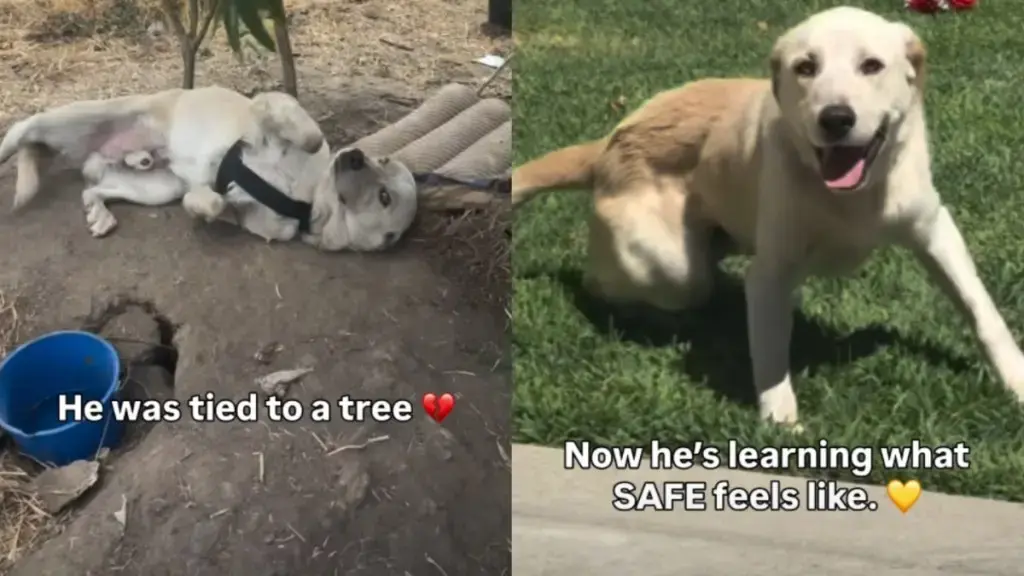
Rescue Dog Learns to Play After Life Tied to a Tree — Now He Needs a Family of His Own
How a Dog Learns to Trust Again
Lucky, a 2-year-old Labrador Retriever mix, was found tied to a tree at a homeless camp in Stockton, California, where he had spent much of his early life with little human interaction or freedom. Rescued by local animal welfare volunteers, he has since undergone a remarkable transformation, learning to trust people, play with other dogs, and enjoy simple joys like walks and outdoor exploration. Today, he is ready for adoption and seeking a permanent home where he can continue to heal and thrive.
Latest news
 Rescue Dog Shows Gratitude to Every Person Helping Her Heal
 Family Adopts Terminally Ill St. Bernard After Her Human Passes Away
 Neighbors Take Action After Town Ignores Abused Dog
 Retired Firefighter Reunited with Lost Dogs During Live Interview
His journey from isolation to joy highlights the resilience of animals and the impact of compassionate care. After being removed from the tree where he was restrained, Lucky received medical attention, behavioral support, and socialization training at a foster-based rescue organization. Volunteers note that his progress has been swift — he now responds to basic commands, shows excitement at the sight of a leash, and initiates play with canine companions. His foster caregivers describe him as affectionate, eager to please, and deeply grateful for kindness, traits that have made him a favorite among those who have met him.
What Does It Take to Give Lucky a Forever Home?
Rebuilding trust in a dog who has known only confinement requires patience, consistency, and positive reinforcement. Lucky’s caregivers used food rewards, gentle handling, and gradual exposure to new environments to help him overcome fear and anxiety. Over weeks, he began to initiate contact, wag his tail when approached, and seek out affection. His ability to form bonds quickly despite his past underscores the emotional adaptability of dogs when given a safe and nurturing space. Experts say such recoveries, while not instantaneous, are possible with dedicated foster care and trauma-informed training methods.
Prospective adopters should understand that while Lucky has made great strides, he may still benefit from a calm, structured household where he can continue to build confidence. He gets along well with other dogs and would thrive in a home with a secure yard and active owners who enjoy outdoor activities. The rescue group emphasizes that he is house-trained, vaccinated, and microchipped, and they offer post-adoption support to ensure a smooth transition. Above all, they seek a family willing to offer love, stability, and the chance for Lucky to simply be a dog — playing, exploring, and belonging.
Is Lucky good with children? Based on his behavior in foster care, Lucky interacts gently with older children who understand how to approach dogs respectfully. Supervision is recommended with younger kids due to his size and energy.
Frequently Asked Questions
Does he require special training? Lucky knows basic commands like sit and stay, and walks well on a leash. Continued positive reinforcement training will help him maintain progress and deepen his bond with his new family.
How can I adopt Lucky? Interested individuals can contact the rescue organization directly through their official channels to begin the application process, which includes a home interview and meet-and-greet.