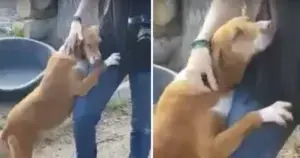
Rescue Dog Hugs News Reporter Until He Adopts Her
The Dog Who Chose Her Human
A news reporter visiting an animal shelter for a routine story found himself unexpectedly adopted by a persistent dog who refused to let go. The encounter took place at a local shelter during a segment on pet adoption efforts, where the reporter was interviewing staff and filming footage. The dog, a mixed-breed with a calm demeanor, approached him quietly but firmly, initiating physical contact that quickly turned into a prolonged hug. Witnesses said the dog clung to his leg and rested her head on his shoulder, showing clear signs of attachment. The reporter, initially there only to cover the event, became emotionally moved by the dog’s insistence and affectionate behavior. Shelter workers noted that while many animals seek attention, this dog’s behavior was unusually focused and sustained, suggesting a deliberate choice rather than random interaction.
Latest news
 Rescue Dog Shows Gratitude to Every Person Helping Her Heal
 Family Adopts Terminally Ill St. Bernard After Her Human Passes Away
 Neighbors Take Action After Town Ignores Abused Dog
 Retired Firefighter Reunited with Lost Dogs During Live Interview
The moment was captured on camera and later shared widely, highlighting how animals often initiate bonds with humans in ways that defy expectation.
The dog’s actions went beyond typical shelter behavior, according to staff who observed her interactions throughout the day. While other animals wandered or barked for attention, she consistently returned to the reporter, nudging his hand and waiting patiently beside him. One employee recalled how she sat at his feet during the interview, refusing to leave even when offered treats or toys elsewhere. „She didn’t just want pets,” the worker said. „She wanted to stay.” The reporter admitted he hadn’t planned to adopt anyone that day but felt an immediate connection when she leaned into his embrace. He described the hug as „unlike anything I’ve felt from a dog before”—calm, intentional, and deeply comforting. After the segment ended, he returned to the shelter to complete adoption paperwork, confirming the dog had made her choice clear.
Could This Happen to Anyone?
The shelter confirmed the dog had been there for several weeks, overlooked by many visitors despite her gentle nature.
Experts say while such moments feel rare, dogs often form quick attachments based on subtle human cues like tone of voice, posture, or scent—factors reporters may emit without realizing during calm, focused work. Animal behaviorists note that shelter dogs, especially those stressed by kennel life, may latch onto individuals who project stillness and kindness. In this case, the reporter’s quiet demeanor during filming may have signaled safety to the dog, triggering her instinct to bond. The shelter emphasized that while not every visitor will experience this, the incident underscores how adoption isn’t always a human-led decision. Many staff shared similar stories of dogs choosing their humans in quiet, persistent ways—waiting by gates, following footsteps, or simply refusing to walk away.
The dog, now named Sunny by her new owner, has adjusted well to her new home, reportedly greeting her reporter-turned-guardian at the door each evening with the same quiet insistence that started it all.
Frequently Asked Questions
Why did the dog choose this specific reporter over others at the shelter? She consistently returned to him despite other people nearby, showing sustained physical affection and focus that staff interpreted as a deliberate bond rather than random attention-seeking.
Is it common for shelter dogs to adopt humans instead of the other way around? While not tracked statistically, shelter workers frequently report cases where dogs initiate closeness with specific individuals, suggesting the animal’s choice plays a significant role in many adoptions.
What happened to the dog after the adoption was finalized? The dog, now called Sunny, lives with the reporter and has settled into her new home, showing signs of comfort and attachment through daily routines like greeting him at the door.