Paralyzed Dog's First Toe Wiggle After 120 Days Brings Tears of Joy to Owner
A Glimmer of Hope After Months of Stillness
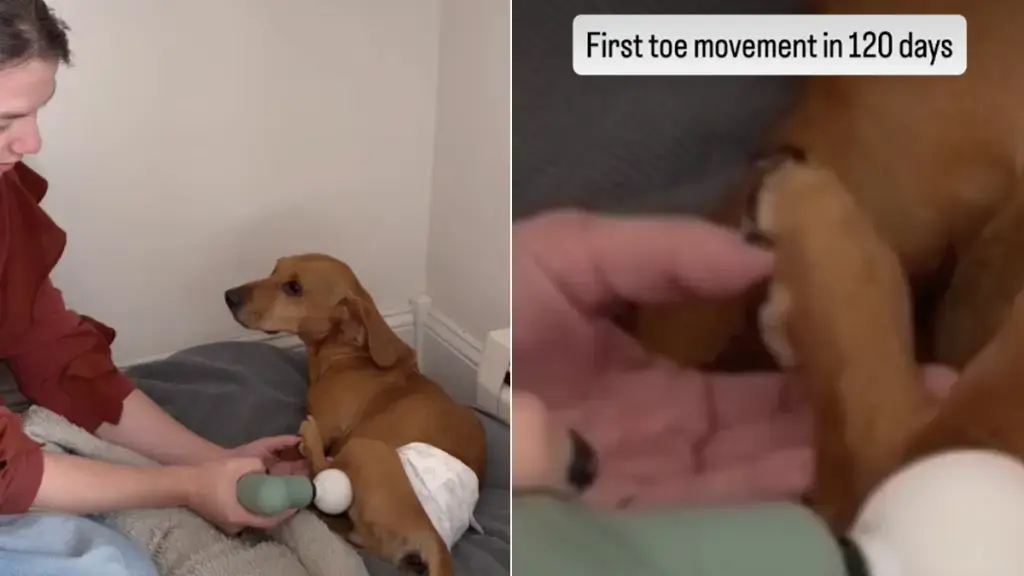
Ted, a dog suffering from Intervertebral Disc Disease (IVDD), showed his first tiny toe movement after 120 days of complete paralysis, leaving his owner overwhelmed with emotion. The heartwarming moment was captured on video, showing the pup's minuscule wiggle that signaled hope after months of stillness.
Latest news
 Rescue Dog Shows Gratitude to Every Person Helping Her Heal
 Family Adopts Terminally Ill St. Bernard After Her Human Passes Away
 Neighbors Take Action After Town Ignores Abused Dog
 Retired Firefighter Reunited with Lost Dogs During Live Interview
Ted's condition had left him unable to move his legs, prompting his dedicated owner to use a massage gun regularly in an attempt to provide relief and stimulate circulation. IVDD affects the spinal cord in dogs, often leading to partial or complete loss of mobility in the hind legs. Despite the grim prognosis, Ted's family refused to give up, incorporating daily therapy sessions and unwavering care into their routine. The unexpected toe movement came as a shock during one of these routine massage sessions, marking a potential turning point in his recovery journey.
The video, which quickly gained traction online, shows Ted's owner gently massaging his leg when suddenly, one toe twitched. Her immediate reaction was a mix of disbelief and joy as she called out to him, tears streaming down her face. „I couldn't believe it,”she said in the video. „After 120 days, he moved!”The moment was both surreal and deeply touching, representing the first sign of neurological improvement since Ted's diagnosis. Veterinarians note that even minor movements can indicate nerve regeneration, especially in cases involving IVDD where early intervention plays a crucial role.
While a single toe movement may seem small, veterinary experts emphasize that it can be a significant milestone in neurological recovery. Dogs with IVDD are often treated with strict rest, medication, or surgery depending on severity. Physical therapy, including techniques like those used by Ted's owner, can complement medical treatment by improving blood flow and preventing muscle atrophy. Ted's case highlights the importance of perseverance and home-based care in managing chronic conditions in pets. His family plans to continue with regular therapy sessions, hoping for further improvements in his mobility.
What Does This Mean for Ted's Future?
Frequently Asked Questions
What is Intervertebral Disc Disease (IVDD) in dogs? IVDD occurs when the cushioning discs between a dog's vertebrae degenerate or herniate, potentially compressing the spinal cord and causing pain, weakness, or paralysis.
Can dogs recover from paralysis caused by IVDD? Recovery varies widely; some dogs regain partial or full function with treatment, while others may require long-term care and assistance.
Is using a massage gun safe for dogs with IVDD? When used gently and under veterinary guidance, massage therapy can help improve circulation and reduce muscle stiffness, but it should never replace professional treatment.