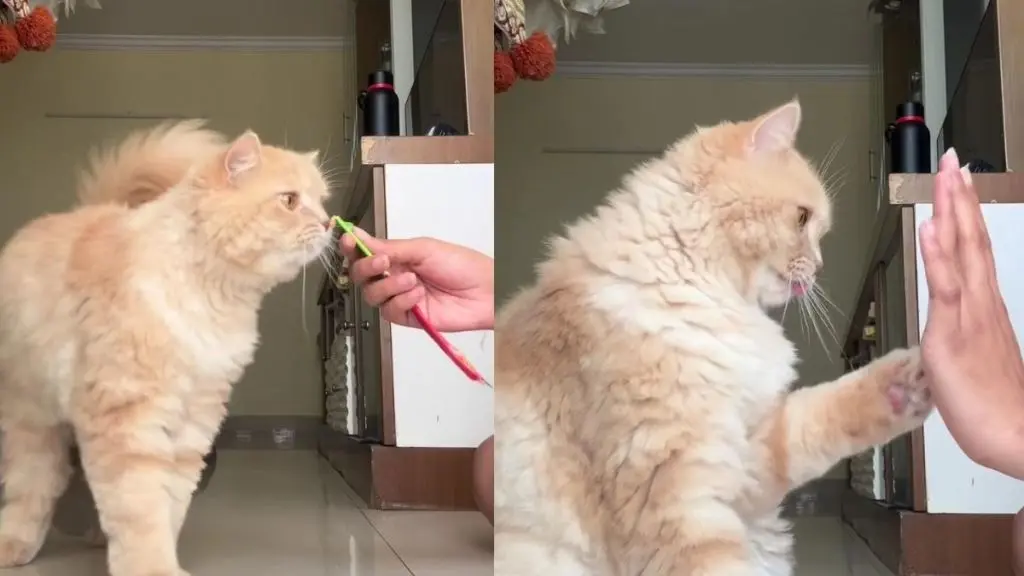
Owner Trains Cat to Perform Five Dog-Like Tricks Using Simple Treats
How Treat Motivation Shapes Feline Learning
A pet owner in the United States has successfully trained her orange tabby cat, Doobie, to perform five tricks typically associated with dogs, using only a squeeze-up treat as motivation. The training session, captured in a short video, shows Doobie responding promptly to cues for sitting, offering a paw, giving a high five, standing upright, and completing a final maneuver. The owner, identified only as Mom in the footage, guides Doobie through each step with calm consistency, reinforcing desired behaviors with immediate treats. The video, shared online, highlights the cat’s focus and eagerness to follow directions, challenging common assumptions about feline trainability. Doobie’s performance demonstrates that cats can learn complex behaviors when motivated correctly, blurring the line between traditional pet capabilities.
Latest news
 Rescue Dog Shows Gratitude to Every Person Helping Her Heal
 Family Adopts Terminally Ill St. Bernard After Her Human Passes Away
 Neighbors Take Action After Town Ignores Abused Dog
 Retired Firefighter Reunited with Lost Dogs During Live Interview
The training relies on positive reinforcement, where each correct action is immediately rewarded with a small squeeze-up treat. This method encourages repetition and strengthens the association between command and reward. Doobie’s owner begins with basic obedience, such as sitting, before progressing to more complex tasks like standing on hind legs to reach the treat. The cat’s ability to sequence five distinct actions in quick succession suggests strong focus and memory retention. Experts note that while cats are often seen as independent, they respond well to consistent, reward-based training when sessions are short and engaging. The use of high-value treats, like the squeeze-up variety, appears critical in maintaining Doobie’s interest throughout the routine.
Can Cats Really Learn Like Dogs?
Yes, cats can learn tricks typically taught to dogs when training methods align with their natural behaviors and motivations. Unlike dogs, which often seek praise, cats are primarily driven by food rewards and immediate gratification. Doobie’s success stems from breaking each trick into small, manageable steps and rewarding incremental progress. The owner avoids punishment or force, instead waiting for the cat to offer the desired behavior before treating. This approach respects the cat’s autonomy while building trust and cooperation. Veterinary behaviorists emphasize that patience and consistency are key, noting that feline training may take longer than canine training but yields similar results when done correctly. Doobie’s routine proves that motivation, not species, determines trainability.
What treats work best for training cats? High-value, soft treats like squeeze-up varieties are effective because they are easy to consume quickly and strongly motivate cats during short sessions.
Frequently Asked Questions
How long should cat training sessions last? Sessions should be kept under five minutes to match a cat’s attention span, with multiple short sessions spread throughout the day being more effective than one long one.
Can older cats learn new tricks? Yes, cats of any age can learn with proper motivation, though younger cats may pick up behaviors faster due to higher energy and curiosity.