
How to Manage Your Dog's Ball Aggression: Expert Advice from Dr. Paola Cuevas
Practical Guide to Controlling Your Dog's Aggression Around Balls
From Dogster, a reader-supported platform, we provide verified and up-to-date information in line with the latest veterinary research. For more details, see the „Learn moresection. In our ”Ask Dr. Paolaseries, published monthly, we bring you expert advice directly from Dr. Paola Cuevas, MVZ, senior in-house veterinarian at Dogster and Pangolia. With over 19 years of experience working with various animal species, she aims to share her knowledge to help pet parents better understand the health and well-being of their four-legged friends. A graduate of the University of Guadalajara, Mexico, Dr. Cuevas ensures all information provided aligns with current veterinary medicine standards. In this edition, we address a common but unusual issue: ball-related aggression in dogs.
Latest news
 Rescue Dog Shows Gratitude to Every Person Helping Her Heal
 Family Adopts Terminally Ill St. Bernard After Her Human Passes Away
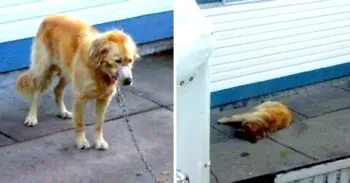 Neighbors Take Action After Town Ignores Abused Dog
 Retired Firefighter Reunited with Lost Dogs During Live Interview
A reader named Sandra wrote in about Levi, her two-year-old dog, who reacts intensely when another creature tries to take his favorite ball. Levi, whose mother was a cattle dog and whose father is unknown, chooses a tennis ball at the park and becomes highly protective of it. If another dog approaches, Levi reacts by jumping or barking in an attempt to maintain control over the object. Sandra wonders why Levi cannot simply choose another ball and notes that, although his sister Ruby also plays with balls, she does not display this aggressive behavior, despite the two playing quite roughly at home. Dr. Paola Cuevas explains that Levi's behavior does not indicate general aggression or an attempt to assert dominance, but is a classic case of resource guarding – in this case, the tennis ball has become a high-value object for the animal.
Levi has learned that by attacking or intimidating other dogs who approach
Levi has learned that by attacking or intimidating other dogs who approach, he succeeds in discouraging them and maintaining control over the desired object. This reaction can be compared to that of a person who, after repeatedly having their favorite theater seat taken, tries to guard it even before anyone else sits down. Although Levi's heritage as a cattle dog may influence his motivation to control movement and resources, Dr. Cuevas emphasizes that genetics alone does not explain this behavior. It is essential to understand that the animal is not acting out of malice, but from conditioned learning: the guarding behavior has worked in the past, so it is repeated. The recommended solution is not to give in to the dog's demands, but to prevent the repetition of the problematic behavior. Dr.
Paola suggests that the most important step is to avoid dog parks where tennis balls are left freely accessible. If Levi no longer has the opportunity to encounter situations that trigger his aggressive reaction, he will no longer be able to practice and reinforce this behavior pattern. This is not a concession, but a management strategy that stops the cycle of negative reinforcement. It is also helpful to introduce safe alternatives for play – rubber or paper balls, which are less attractive to other dogs and can reduce competition. Working with a professional trainer or animal behaviorist can help develop exchange games („drop it”) and gradual desensitization to the presence of other dogs near the play object. In conclusion, aggression toward balls is not a sign of spite or dominance, but a learned behavior that can be modified through prevention, understanding, and proper training.
With patience and consistency, dogs like Levi can learn to play without tension, even in stimulating environments.