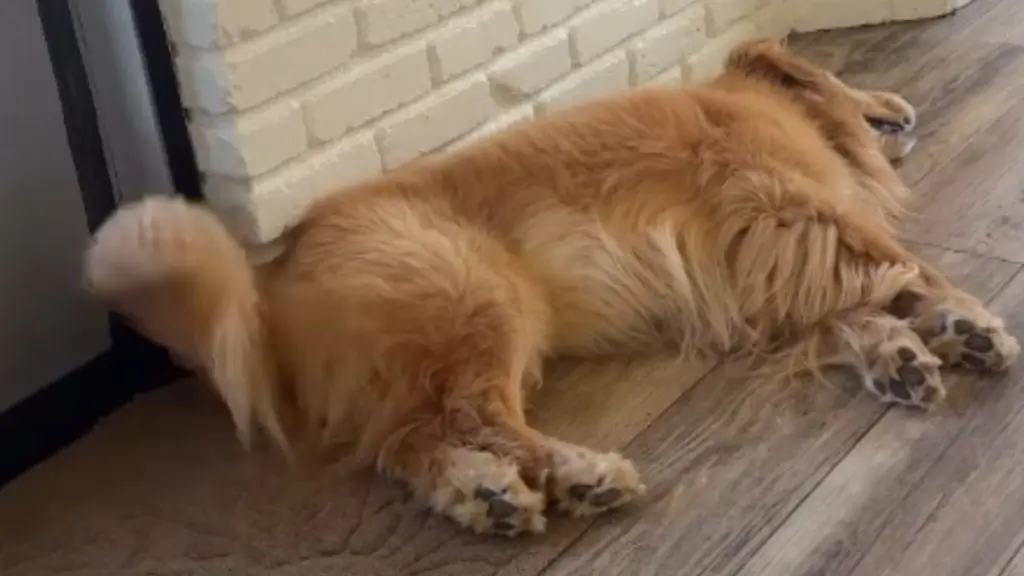
Golden Retriever Bruce Greets Visitors with Tail‑Wagging Warmth
Tail Talk: How a Simple Wag Can Speak Volumes
Bruce, a golden‑retriever living in San Diego, has become a local internet sensation after a short video showed him lying comfortably on his floor while enthusiastically wagging his tail to greet a guest. The clip, posted on Instagram by his owner, captured the breed’s trademark friendliness and quickly spread across social media, drawing thousands of comments praising the dog’s charming demeanor.
Latest news
 Premium Memory Foam Beds Transform Canine Sleep Quality
 Walmart's Festive Cat Tree Features Reindeer Antlers and Gold Star Topper
 Healthy Pumpkin Treats for Dogs: 7 Top Picks
 Anthropologie’s Clear Acrylic Pet Gate Keeps Pets Out Without Ruining the Room
Bruce’s relaxed posture and exuberant tail motion illustrate why golden retrievers are celebrated as companion animals. Experts say the breed’s innate sociability makes them eager to please and quick to bond with humans. In Bruce’s case, his owner noted that the dog seems to have learned that a calm, low‑lying stance combined with a vigorous wag signals a warm welcome without overwhelming the visitor. The video also highlights how simple body language can convey affection, a trait trainers often emphasize when teaching dogs to greet people politely.
Golden retrievers are known for using their tails as a primary communication tool. When Bruce’s tail sweeps back and forth, it releases endorphins that reinforce his positive feelings toward the newcomer. Veterinarian Dr. Lena Ortiz explains that a wagging tail can indicate excitement, confidence, or a desire for interaction, depending on its speed and height. In Bruce’s greeting, the tail’s rapid motion paired with his calm body posture suggests a balanced mix of enthusiasm and composure, making the visitor feel instantly at ease. Owners often encourage this behavior by rewarding calm greetings, which helps dogs like Bruce understand that a gentle approach is both acceptable and rewarding.
Why Do Golden Retrievers Thrive as Home Ambassadors?
The breed’s history as hunting partners and family pets has shaped its adaptable nature. Their innate desire to please and strong social instincts mean they readily learn to read human cues. Bruce’s owner, Maria Lopez, shared that she trained him from a young age to greet guests without jumping, using treats and praise to reinforce the „stay‑low, wag‑high” routine. This method aligns with canine behavior research showing that positive reinforcement strengthens desired actions more effectively than correction. As a result, Bruce not only entertains viewers online but also serves as a model for responsible pet ownership, demonstrating how simple training can turn a dog into a courteous household member.
Bruce’s viral moment underscores the broader appeal of golden retrievers as gentle, approachable companions. As more pet owners seek to foster calm greetings, the breed’s reputation for friendliness continues to grow, influencing adoption trends and encouraging training programs that emphasize polite social interactions.
Frequently Asked Questions
What makes a golden retriever’s tail wag different from other breeds? Golden retrievers typically have a broad, sweeping wag that reflects high energy and sociability, whereas some breeds use subtler tail movements to signal different emotions.
Can any dog be trained to greet visitors like Bruce? Yes, with consistent positive reinforcement and patience, most dogs can learn a calm, low‑key greeting, though breed temperament can affect the speed of progress.
Is Bruce’s behavior safe for all visitors, including children? Bruce’s relaxed posture and controlled wag make him a safe greeter, but owners should always supervise interactions between dogs and young children to prevent accidental rough play.
Content written by Khushali Srivastava for galore-pets.com editorial team, AI-assisted.