
Golden Puppy’s First Encounter with Her Own Reflection Leaves Her Baffled
Why Dogs Mistake Their Reflections for Real Animals
A fluffy golden‑retriever puppy named Bella startled herself this week when she caught sight of her own image in the glass door of an oven at a family home in suburban Ohio. The incident, captured on a short video posted to social media, shows the young dog pausing, tilting her head, and then barking at the „stranger” that mimics her every move.
Latest news
 Rescue Dog Shows Gratitude to Every Person Helping Her Heal
 Family Adopts Terminally Ill St. Bernard After Her Human Passes Away
 Neighbors Take Action After Town Ignores Abused Dog
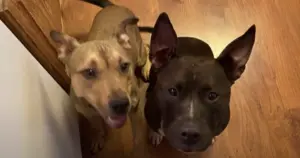 Retired Firefighter Reunited with Lost Dogs During Live Interview
Experts say that many dogs, especially puppies, do not recognize themselves in mirrors or reflective surfaces. The behavior stems from a lack of self‑awareness that typically develops later in a dog’s life. When Bella saw the moving silhouette, she interpreted it as another animal intruding on her space, prompting a mix of curiosity and alarm. The moment quickly turned adorable as she pawed at the glass, tried to sniff the invisible figure, and eventually lost interest when the „other dog” vanished.
Canine cognition research indicates that self‑recognition in mirrors is rare among non‑human mammals. A 2015 study published in Animal Cognition found that only a handful of species, such as great apes and dolphins, consistently pass the mirror test. Dogs, on the other hand, rely heavily on scent and sound rather than visual cues to identify individuals. When faced with a silent, scent‑less image, they often assume it is a fellow canine.
Will Bella Ever Recognize Herself in the Mirror?
Veterinarian Dr. Maya Patel explains, „Puppies are still learning the rules of their environment. A moving reflection can be confusing because it behaves like a live animal but offers no smell or bark. Their instinct is to investigate, which can look comical to owners.” Pet trainers also note that repeated exposure to mirrors can help dogs become desensitized, reducing the startled reactions over time.
The question of whether a dog can ever truly recognize its own reflection remains open. Some owners report that, after months of exposure, their dogs begin to ignore mirrors altogether, suggesting a level of habituation rather than genuine self‑recognition. Others argue that the lack of a clear „self” concept in canine brains makes true identification unlikely.
For Bella, the episode is just another learning step. Her owners plan to let her explore reflective surfaces under supervision, turning the curiosity into a gentle training opportunity. „We’ll keep the oven door closed when she’s around, but we’ll also let her see her reflection in a safe setting,” the family said. Over time, Bella may learn that the image is just a visual echo, not a rival.
The broader takeaway is that such moments highlight the developmental stages of dogs and the importance of patient guidance. As puppies grow, they gradually piece together the world’s sensory puzzle, moving from instinctive reactions to more nuanced understanding.
Frequently Asked Questions
Do all dogs react the same way to mirrors? No. Reactions vary widely; some dogs ignore mirrors completely, while others become excited, fearful, or even aggressive, depending on temperament and prior experiences.
Can training help a dog become comfortable with its reflection? Yes. Gradual exposure combined with positive reinforcement can reduce fear and curiosity, teaching the dog that the reflection poses no threat.
Is a dog’s inability to recognize itself a sign of low intelligence? Not at all. Self‑recognition is a specific cognitive skill that many animals lack, yet dogs excel in other areas such as scent detection, social bonding, and problem solving.