German Shepherd Finds Winning Move to Make Baby Laugh
The Science Behind Canine Playfulness
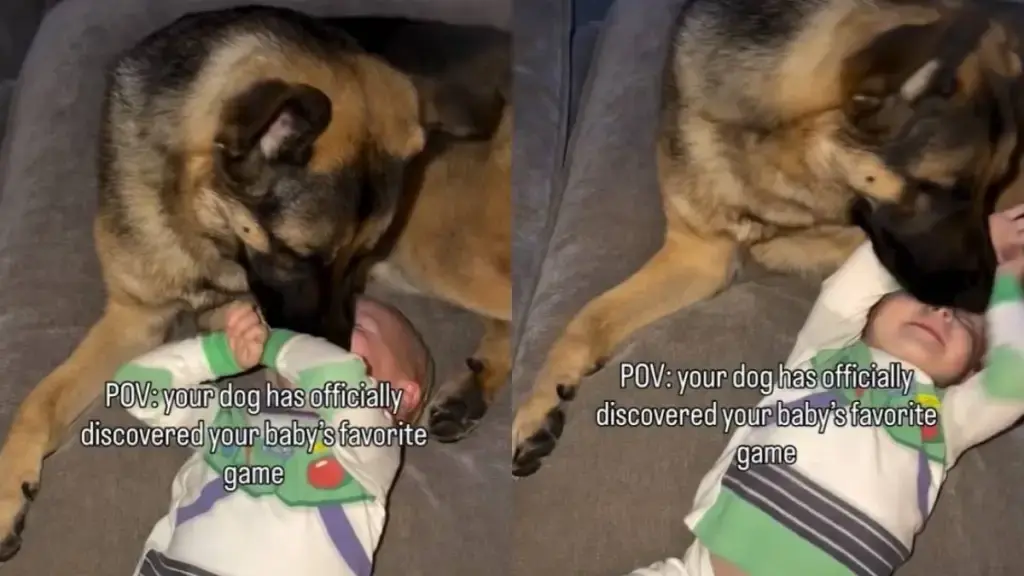
A heartwarming moment captured on video shows a German Shepherd discovering a simple trick to entertain an infant. The scene takes place on a living room couch where the dog and a baby boy are resting together. The puppy notices the child reaching out with small hands toward its belly. This gesture serves as a clear invitation for interaction. The dog immediately understands the cue and begins to engage with the toddler in a playful manner.
Latest news
 Rescue Dog Shows Gratitude to Every Person Helping Her Heal
 Family Adopts Terminally Ill St. Bernard After Her Human Passes Away
 Neighbors Take Action After Town Ignores Abused Dog
 Retired Firefighter Reunited with Lost Dogs During Live Interview
The interaction highlights the intuitive nature of dogs when dealing with young children. The German Shepherd leans forward gently, positioning itself close to the baby. It starts covering the infant’s nose with soft kisses and light nibbles. This specific action triggers a reaction that the dog quickly identifies as positive. The puppy realizes that this particular behavior elicits joy from the child. Consequently, the dog decides to repeat the action multiple times to keep the game going.
Why Does the Dog Keep Trying?
Dogs often use their mouths to communicate affection or initiate play. In this instance, the German Shepherd interprets the baby’s hand movements as a signal to start a game. The dog’s decision to put the action on repeat demonstrates cognitive learning. It observes the result of its behavior and adjusts its strategy accordingly. This feedback loop allows the animal to maintain the infant’s attention effectively. The gentle nature of the nibbling ensures the baby remains comfortable and safe during the interaction.
The repetition of the behavior suggests the dog has found a reliable method for engagement. The initial giggle from the baby acts as a reward signal. The German Shepherd associates the sound of laughter with success. This reinforces the habit of leaning in and kissing the nose. Such behaviors are common in social animals that value bonding. The dog’s persistence indicates a strong desire to connect with the human family member. It turns a simple rest period into an active bonding session.
The outcome of this interaction strengthens the bond between the pet and the child. Early positive experiences with pets can shape a child’s comfort level around animals. The German Shepherd’s patience and adaptability showcase the potential of dogs as companions. As the baby grows, such playful exchanges may continue to evolve. The dog’s ability to read cues ensures a safe and enjoyable environment. This dynamic illustrates how pets contribute to household harmony through spontaneous play.
Frequently Asked Questions
How did the dog learn to make the baby laugh? The dog observed the baby’s hand movements and tested different interactions. It discovered that nose kisses caused giggles. The puppy then repeated this specific action to sustain the reaction.
Is it safe for a German Shepherd to nibble a baby? Yes, the interaction appears gentle and controlled. The dog uses soft pressure and monitors the baby’s reactions closely. This careful approach minimizes the risk of startling the infant.