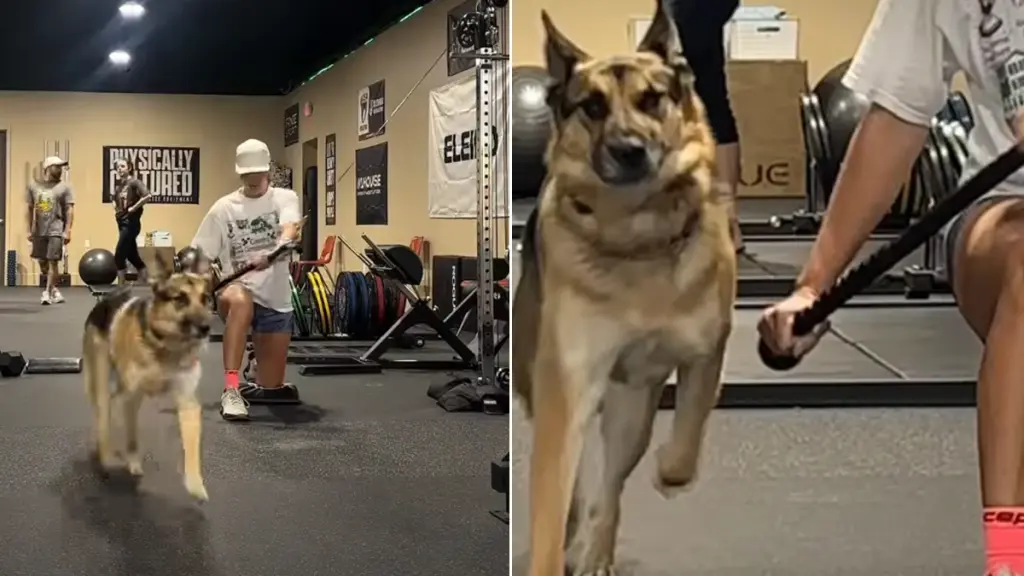
German Shepherd Attempts Gym Walk, Triggers Unexpected Reflex Reaction
Why Do Pets Show Reflex-Like Responses in Gyms?
On September 19, a German Shepherd known as a regular gym companion tried to walk through a fitness facility when its movement triggered an involuntary reflex response. The incident was captured on video by the dog’s owner and later shared on Instagram, showing the animal’s attempt to navigate the space resulting in a sudden, uncontrolled physical reaction. The clip quickly gained attention for highlighting how even well-trained pets can experience unexpected physiological responses in unfamiliar or stimulating environments.
Latest news
 Rescue Dog Shows Gratitude to Every Person Helping Her Heal
 Family Adopts Terminally Ill St. Bernard After Her Human Passes Away
 Neighbors Take Action After Town Ignores Abused Dog
 Retired Firefighter Reunited with Lost Dogs During Live Interview
The dog, accustomed to accompanying its owner during workouts, appeared to be moving normally until a specific stimulus—possibly related to flooring texture, lighting, or ambient noise—elicited a spinal reflex arc typically seen in neurological assessments. Veterinary experts note that such reactions, while startling, are not uncommon in dogs exposed to sudden sensory changes and do not necessarily indicate injury. The owner clarified in the post that the dog was unharmed and resumed normal behavior shortly after the incident, emphasizing that the moment was unintentional and not caused by any external force.
Could This Happen to Any Dog?
Gym environments often present a mix of sensory inputs—echoing sounds, smooth surfaces, and shifting shadows—that can confuse animals used to quieter or more predictable settings. Dogs rely heavily on proprioception and vestibular input to coordinate movement, and disruptions in these systems can lead to temporary motor anomalies. In this case, the German Shepherd’s reaction resembled a stretch reflex, where a sudden change in surface pressure or visual perception triggered an automatic muscle contraction. Animal behaviorists suggest that repeated exposure to such spaces, paired with positive reinforcement, can help dogs adapt and reduce stress-related responses over time.
While breed and temperament play a role, any dog—regardless of size or training—can experience a startle-induced reflex in an overstimulating setting. Factors like age, prior trauma, or sensory sensitivity may increase susceptibility. However, isolated incidents like this one are typically benign and resolve without intervention. Veterinarians recommend observing the animal’s behavior afterward; if reflexes persist or are accompanied by limping, vocalization, or disorientation, a professional evaluation is advised. In this case, the dog showed no lasting effects, reinforcing that the event was a transient neurological quirk rather than a sign of underlying illness.
Was the dog injured during the incident? No, the owner confirmed the dog was unharmed and returned to normal activity shortly after the video was recorded. The reflex-like movement was temporary and did not cause pain or distress.
Frequently Asked Questions
Should owners avoid bringing pets to gyms? Not necessarily, but owners should assess their dog’s comfort level and introduce gym environments gradually. Monitoring for signs of stress or confusion is key to ensuring the animal’s safety and well-being in such spaces.
Can this reflex be mistaken for a seizure? While the movement may resemble a mild seizure to untrained observers, true seizures involve loss of consciousness, paddling limbs, or loss of bladder control—none of which were present here. The incident was consistent with a somatic reflex, not epileptic activity.