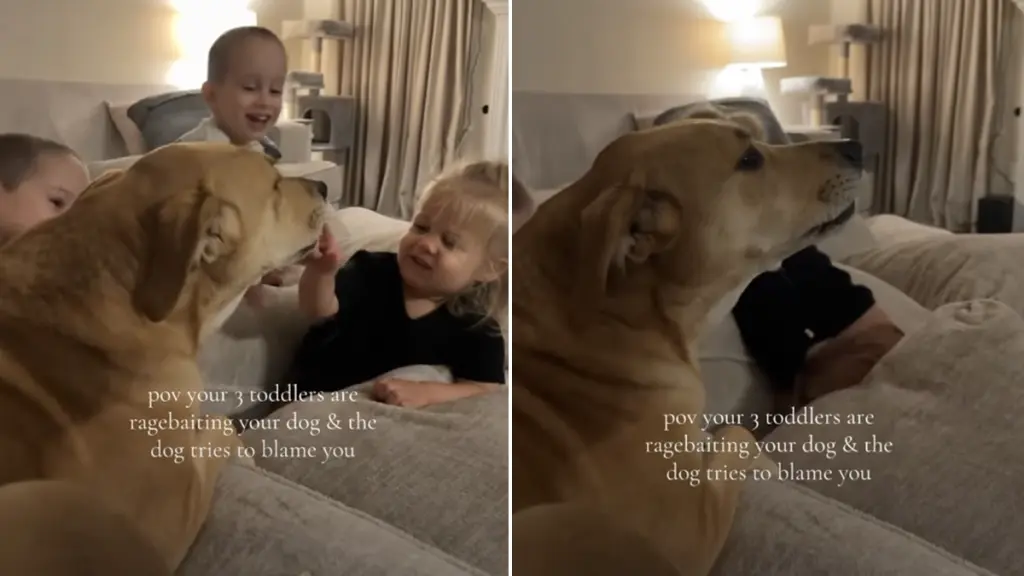
Dog Talks Back as Toddlers Tease Her — Mom Is Clearly Getting Blamed for the Whole Thing
Why Dogs Bark During Play and What It Really Means
A mixed-breed dog named Nilla became the center of a viral moment when three toddlers surrounded her on a cushion fort, what appears to be, a living room cushion fort, reaching for her face and prompting her to bark in response. The scene unfolded in a home setting, captured on video by an amused parent behind the camera, and quickly gained attention online for the dog’s clear communication of discomfort. While the children seemed to be playing, Nilla’s reaction highlighted the importance of recognizing animal boundaries, especially during interactions with young kids who may not understand canine body language.
Latest news
 Rescue Dog Shows Gratitude to Every Person Helping Her Heal
 Family Adopts Terminally Ill St. Bernard After Her Human Passes Away
 Neighbors Take Action After Town Ignores Abused Dog
 Retired Firefighter Reunited with Lost Dogs During Live Interview
The video shows the toddlers persistently trying to boop Nilla’s nose and elicit a response, despite her initial bark serving as a warning. Experts note that dogs often use vocalizations like barking to signal unease before escalating to growls or snaps, particularly when feeling trapped or overwhelmed. In this case, Nilla remained seated but firm in her communication, a behavior animal behaviorists say should be respected rather than encouraged as cute or funny. The mom filming laughed throughout, which drew criticism from viewers who felt she should have intervened to protect both the dog and the children from a potential misunderstanding.
Should Parents Be Held Responsible When Pets React to Toddlers?
Barking in this context is not aggression but a form of communication, often misunderstood by humans who interpret it as playfulness. According to canine behavior specialists, dogs bark to set limits when they feel their personal space is being invaded, especially by fast-moving, unpredictable toddlers. Nilla’s response was appropriate and restrained; she did not lunge or bite, choosing instead to vocalize her discomfort. Ignoring such signals can lead to stress buildup in dogs and may eventually result in a bite, even from typically tolerant animals. Parents are advised to supervise all interactions and teach children to recognize signs of distress in pets, such as lip licking, yawning, or turning away.
Yes, caregivers bear the primary responsibility for ensuring safe interactions between young children and animals. Toddlers lack the cognitive ability to interpret subtle cues from dogs, making adult supervision essential. In this incident, many commenters argued the mother should have redirected the children’s behavior rather than filming and laughing, as her inaction could be seen as endorsing behavior that risks the dog’s well-being. Animal welfare advocates stress that preventing negative experiences helps maintain trust between pets and kids, fostering safer, more positive relationships over time. Proactive intervention not only protects the dog but also teaches children empathy and respect for living beings.
Was Nilla in danger of biting the toddlers? Based on the video, Nilla showed clear warning signs through barking but did not escalate to growling, snapping, or biting. Her behavior was communicative, not aggressive, though continued provocation could have changed that outcome.
Frequently Asked Questions
Why did the mom laugh instead of stopping the toddlers? The mother appeared to find the situation humorous, possibly misunderstanding Nilla’s bark as part of the game. However, experts caution that laughter in such moments can reinforce unsafe behavior and overlook the dog’s stress signals.
How can parents teach kids to interact safely with dogs? Parents should model calm behavior, supervise closely, and teach children to ask permission before touching a dog, avoid face-to-face contact, and stop if the dog moves away or shows signs of discomfort. Role-playing and books about pet body language can also help build awareness.