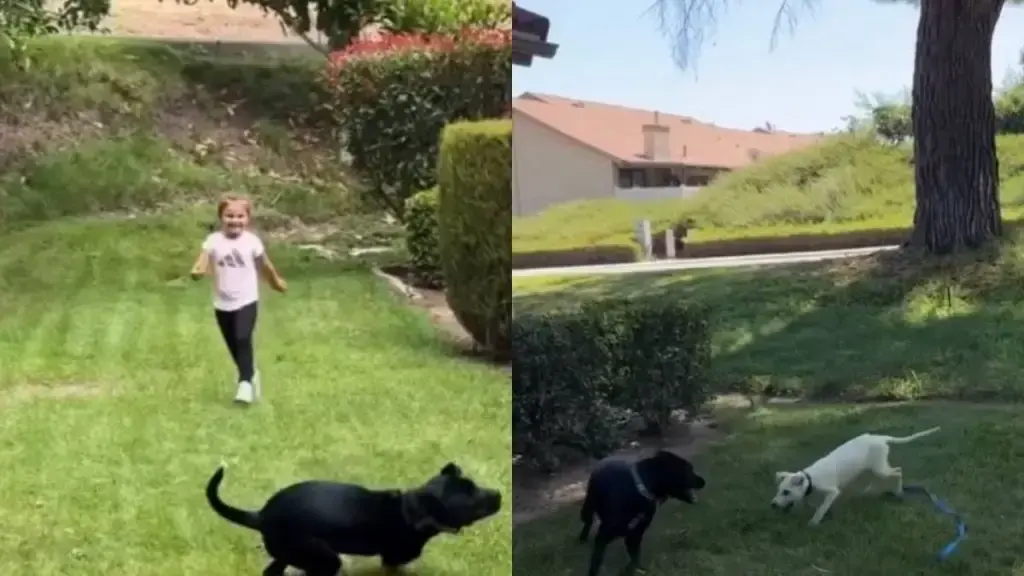
Dog Learns to Play Gentle With New Puppy in Santa Clarita Backyard
Gentle Play: A Lesson in Empathy
A black Labrador named Archie, residing in Santa Clarita, California, has been observed adjusting his play style after a new rescue puppy joined the family. The incident, captured by owner Amy Suppes, shows Archie moving more slowly and cautiously around the tiny pup, Chip, during their outdoor games.
Latest news
 Rescue Dog Shows Gratitude to Every Person Helping Her Heal
 Family Adopts Terminally Ill St. Bernard After Her Human Passes Away
 Neighbors Take Action After Town Ignores Abused Dog
 Retired Firefighter Reunited with Lost Dogs During Live Interview
The family’s backyard became the setting for this heartwarming moment. Suppes noted that Chip had recently arrived and was still acclimating to his new environment. Archie, already familiar with the household, seemed to recognize the puppy’s vulnerability and altered his usual energetic behavior, opting for gentler interactions.
Observations suggest that dogs can sense the physical limits of smaller companions. Archie's deliberate slowing down indicates an instinctive understanding that not all play requires the same intensity. This behavior mirrors studies that show larger dogs often modulate their energy when interacting with puppies or smaller breeds, reducing the risk of accidental injury.
Why Do Some Dogs Naturally Adjust Their Play?
Suppes shared, „It was amazing to see Archie pause and watch Chip, almost as if he was checking if the little one was comfortable.” The Labrador’s calm approach not only ensured Chip’s safety but also fostered a bond between the two animals, illustrating how experienced dogs can teach younger ones appropriate play etiquette.
The ability to adapt play intensity may stem from a dog’s social learning and past experiences. Dogs that have lived with multiple breeds or have been trained in gentle handling often display heightened sensitivity to body language. In this case, Archie's mature presence likely influenced Chip’s confidence, allowing the puppy to explore his new surroundings without fear.
Looking Ahead: Encouraging Gentle Play in Mixed-Breed Homes
Experts suggest that such interactions can accelerate a puppy’s social development. When a dominant dog demonstrates restraint, the younger dog learns to navigate social hierarchies safely. This dynamic can reduce future aggression or fear-based behaviors, promoting a harmonious household.
Owners of mixed-breed families can take cues from Archie’s example. Introducing new puppies gradually, monitoring play sessions, and rewarding calm behavior can help establish a balanced relationship. By modeling gentle play, senior dogs can serve as living trainers, easing the transition for younger members.
Frequently Asked Questions