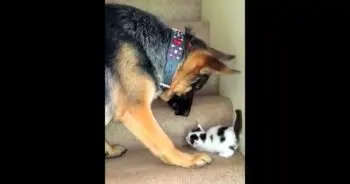
Dog Ignores Owner’s Warning To Protect New Kitten
Instincts Override Training
A woman adopted a small kitten and brought it home to live with her existing dog. She immediately told the canine to stay away from the new arrival. The dog refused to listen to these commands. Instead, it moved closer to the vulnerable baby cat. This unexpected reaction surprised the owner and highlighted the dog’s protective instincts. The incident showcases how pets often understand family dynamics better than their human owners do.
Latest news
 Rescue Dog Shows Gratitude to Every Person Helping Her Heal
 Family Adopts Terminally Ill St. Bernard After Her Human Passes Away
 Neighbors Take Action After Town Ignores Abused Dog
 Retired Firefighter Reunited with Lost Dogs During Live Interview
The owner initially feared the dog might harm the tiny kitten. She used a firm voice to establish boundaries. However, the animal ignored the verbal warnings completely. It did not show aggression or fear. Rather, it displayed a calm and steady demeanor. The dog positioned itself near the kitten, creating a physical barrier. This behavior suggests the canine recognized the kitten as a new family member. It chose guardianship over obedience in this specific context.
Dogs possess a strong drive to protect vulnerable members of their pack. This instinct often overrides standard training protocols. In this case, the dog likely perceived the kitten as weak. It acted as a shield against potential threats. The owner observed this shift in behavior with surprise. The dog did not bark or growl. It simply stayed close, watching the kitten intently. This quiet vigilance is a common trait in protective breeds. It demonstrates a deep emotional bond forming rapidly. The owner realized her initial fear was misplaced. The dog was not a threat but a guardian.
The interaction between the two animals defied typical expectations. Most owners worry about initial hostility. They expect hiding or aggressive hissing from the cat. They also expect rough play or intimidation from the dog. This scenario presented a different dynamic. The dog’s refusal to move away signaled acceptance. It indicated a desire to nurture rather than dominate. The owner noted the kitten’s comfort level increased. The small cat stopped trembling and began to explore. It stayed within the dog’s immediate vicinity. This proximity built trust between the two species. The owner documented the moment to share with others. The video gained attention for its heartwarming nature. It serves as a reminder of canine loyalty.
Can Dogs Really Protect Kittens?
Yes, many dogs exhibit protective behaviors toward smaller animals. Studies show dogs can recognize vulnerability in other species. They often act as bodyguards for young or sick animals. This behavior is rooted in pack hierarchy and care. Not all dogs will react this way, though. Individual temperament plays a major role. Early socialization also influences these interactions. Owners should monitor initial meetings closely. However, they should also allow natural bonding to occur. Forcing separation can hinder trust development. The dog in this instance proved that patience yields results. It showed that empathy exists across species lines.
The long-term outcome for this household appears positive. The kitten now has a dedicated protector. The dog has found a new purpose in the family. Their relationship strengthens daily through shared space. The owner feels relief and gratitude for the bond. This story encourages other pet owners to remain open. It suggests that unexpected alliances can form. Trusting animal instincts often leads to better outcomes. The family now enjoys a harmonious multi-pet environment. The dog’s initial defiance was actually a sign of love. It prioritized the kitten’s safety over human instruction. This nuanced understanding of animal behavior is valuable. It reminds us that pets have complex emotional lives. They make decisions based on perceived need. The owner’s experience validates the importance of observation. She learned to read her dog’s non-verbal signals. This skill improves the overall pet household dynamic.
The story ends on a hopeful note for animal welfare.
It highlights the potential for cross-animal friendship. Frequently Asked Questions
Why did the dog ignore the owner’s command? The dog likely felt a stronger protective instinct toward the vulnerable kittens. It prioritized the safety of the new family member over immediate compliance with verbal orders.
Is it safe to leave a dog and new kitten alone? It is generally recommended to supervise initial interactions closely. However, if the dog shows calm, protective behavior, unsupervised time may be safe after a period of observation.