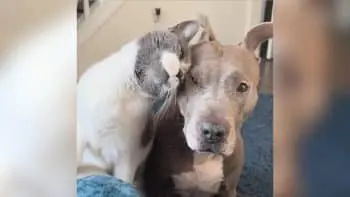
Cat’s Tender Gaze on Pit Bull Companion Sparks Family’s Delight
A Quiet Alliance That Defies Stereotypes
Abe, a tuxedo‑patterned cat living in a suburban home in Ohio, has formed an unlikely bond with Joan, a gentle Pit Bull that the family adopted two years ago. Neighbors and visitors often pause to watch the feline stare lovingly at the larger dog, as if recalling a shared past life. The pair spend most of their day together, whether curled up on the couch or sharing a sunny spot on the porch.
Latest news
 Rescue Dog Shows Gratitude to Every Person Helping Her Heal
 Family Adopts Terminally Ill St. Bernard After Her Human Passes Away
 Neighbors Take Action After Town Ignores Abused Dog
 Retired Firefighter Reunited with Lost Dogs During Live Interview
The friendship began shortly after Joan arrived, when Abe approached the new dog with cautious curiosity. Instead of fleeing, the cat pressed his head against Joan’s flank, and the two have been inseparable ever since. Their owners say the cat’s eyes soften whenever Joan is nearby, and the dog often nudges the cat with her nose to invite play. Veterinarians note that such cross‑species affection can reduce stress for both animals, promoting healthier hearts and calmer temperaments.
In a household where both pets receive equal attention, Abe has taken on the role of a devoted sidekick. He frequently climbs onto Joan’s back during walks, riding like a tiny rider while the dog trots along the sidewalk. „It’s like watching a tiny knight on a noble steed,” laughs the family’s eldest child. The duo’s routine includes shared naps on a plush blanket, with Abe’s purrs syncing to Joan’s steady breathing. Observers claim the cat’s steady gaze at Joan’s face resembles a human’s look of deep affection, prompting jokes that the two might have known each other in a former existence.
Can Such Unlikely Friendships Influence Pet Care Practices?
Experts explain that cats often seek out larger, calm animals for security, especially when the larger companion displays gentle behavior. Joan’s patient demeanor—she never chases or snaps at Abe—has created a safe environment where the cat can express vulnerability. The pair’s interactions have also encouraged the family to spend more time outdoors, leading to healthier lifestyles for both owners and pets.
The story of Abe and Joan has sparked conversations among pet owners about encouraging interspecies friendships. Animal behaviorists suggest that introducing a calm, well‑socialized dog to a cat can ease feline anxiety, provided introductions are gradual and supervised. In Abe’s case, the family used scent swapping and short, leashed meetings before allowing free interaction. The result is a harmonious household where the cat no longer hides during feeding times, and the dog has learned to respect the cat’s space.
Veterinary clinics across the region have reported an uptick in owners seeking advice on mixed‑species companionship after hearing about Abe and Joan. Clinics recommend regular health checks for both animals to ensure that any potential disease transmission is monitored, though the risk is low when both pets are up to date on vaccinations.
The bond between the cat and the Pit Bull illustrates how empathy can cross species lines, offering a model for pet owners seeking to enrich their animals’ lives. As more families embrace such relationships, the hope is that pets will enjoy longer, happier lives together.
Frequently Asked Questions
Do cats and dogs need special training to get along? Yes, gradual introductions, positive reinforcement, and respecting each animal’s boundaries are key. Supervised meetings help both pets adjust safely.
Can a dog’s size be a danger to a cat? If the dog is gentle and well‑trained, size alone isn’t a threat. Owners should monitor interactions and intervene if play becomes too rough.
What health checks are recommended for mixed‑species households? Both pets should stay current on vaccinations, receive regular veterinary exams, and be screened for parasites to prevent any cross‑species health issues.