Why Do Cats (adsbygoogle = window.adsbygoogle || []).push({});
The process relies on flexibility, a highly developed vestibular system, and
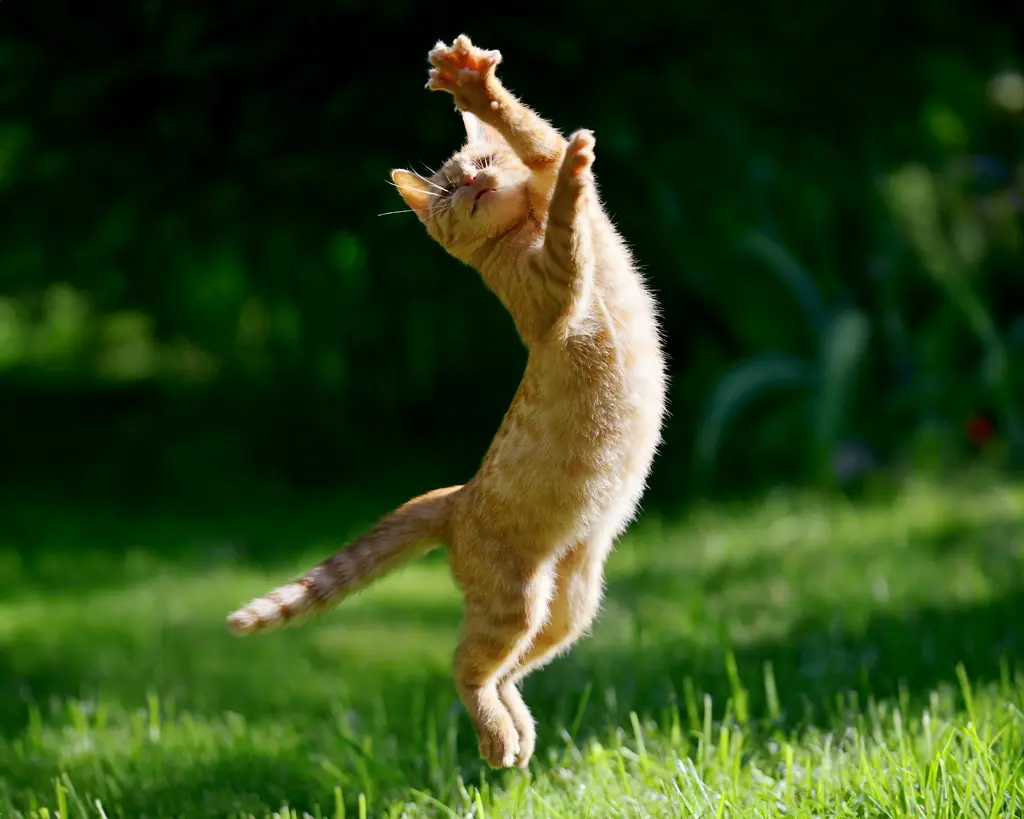
Why Do Cats (Almost) Always Land on Their Feet? The Amazing Physics of a Perfect Landing For over a century, scientists have puzzled over how cats manage to twist their bodies mid-air and land on their feet after a fall. Known as the „falling cat problem,”this phenomenon has intrigued physicists and biologists alike since the late 19th century. Recent research has finally uncovered the mechanics behind this seemingly magical ability, revealing it is not due to luck but to precise biomechanics and conservation of angular momentum. Cats achieve this feat by bending their bodies in mid-air, separating their front and rear halves to rotate independently. By tucking in their front legs and extending their rear legs, they create different moments of inertia, allowing one part of the body to rotate while the other counter-rotates.
Latest news
 Rescue Dog Shows Gratitude to Every Person Helping Her Heal
 Family Adopts Terminally Ill St. Bernard After Her Human Passes Away
 Neighbors Take Action After Town Ignores Abused Dog
 Retired Firefighter Reunited with Lost Dogs During Live Interview
This enables them to reorient without violating physics laws, all within a fraction of a second.
The process relies on flexibility, a highly developed vestibular system, and rapid neuromuscular responses. How Flexibility and Inner Ear Signals Guide the Flip A cat’s spine is exceptionally flexible, allowing it to twist more than most mammals. Combined with input from the inner ear, which detects orientation and motion, the cat’s brain quickly calculates the necessary adjustments. Studies using high-speed video show that the reorientation begins almost immediately after the fall starts, often within the first 20 centimeters of descent. This rapid response is critical for survival, especially from low heights where time is limited. What Happens When a Cat Falls From Greater Heights? Interestingly, cats falling from higher stories sometimes sustain fewer injuries than those from moderate heights. This is because they reach terminal velocity and relax their bodies, spreading out like a parachute to increase air resistance and reduce impact force.
However, this does not mean falls are safe—many cats still suffer serious trauma. Veterinarians warn against testing this ability, as urban environments present additional dangers like uneven terrain and obstacles. Frequently Asked Questions Can all cats perform this righting reflex? Most healthy cats develop the ability by seven weeks of age, though kittens younger than this may not yet have the coordination or muscle control needed. Is the landing always successful? No—while cats often land on their feet, factors like obesity, injury, or surprise can impair their ability to reorient in time. Does this mean cats are immune to injury from falls? Absolutely not. Despite their remarkable skill, cats can and do suffer broken bones, internal injuries, or worse from falls, especially in urban settings.