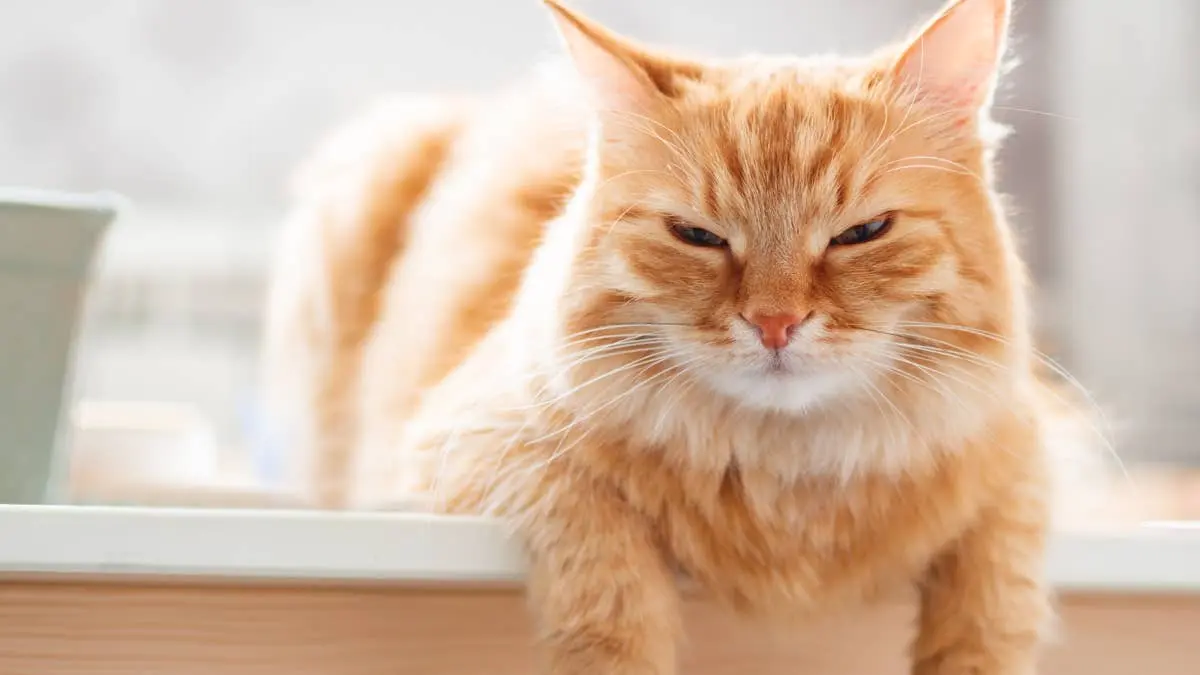
Orange Cat Sees Neighbor's Kitty in His Old Cat Tree and Looks Personally Betrayed
Why Cats React Strongly to Lost Territory
A viral TikTok video shows an orange cat staring intently at a neighbor's feline lounging in his former cat tree, displaying what viewers describe as a deeply personal sense of betrayal. The clip, shared by cat mom @ThreePosskateers, captures the moment her cat Prissy realizes another cat is using his favorite perch. The video quickly gained attention for its relatable portrayal of feline jealousy and territorial behavior, resonating with pet owners who recognize similar reactions in their own animals.
Latest news
 Rescue Dog Shows Gratitude to Every Person Helping Her Heal
 Family Adopts Terminally Ill St. Bernard After Her Human Passes Away
 Neighbors Take Action After Town Ignores Abused Dog
 Retired Firefighter Reunited with Lost Dogs During Live Interview
The video features Prissy, one of three cats in the household, fixated on the intruder occupying the cat tree he once claimed as his own. According to the owner, the tree had been Prissy’s preferred spot for napping and observing the outdoors before being replaced or relocated. The neighbor’s cat, unfamiliar to Prissy, now uses the structure without hesitation, triggering what appears to be a strong emotional response. Experts note that cats often form strong attachments to specific objects and spaces, and changes in their environment can lead to stress or possessive behaviors, especially when those items are associated with comfort or dominance.
Could This Be More Than Just Jealousy?
Cats are highly territorial animals, and their sense of security is closely tied to familiar spaces and objects. When a cat loses access to a favored item like a cat tree, it can perceive the intrusion as a threat to its social standing or safety. In multi-cat households or neighborhoods, such encounters can trigger vocalizations, staring, or even aggression. The owner explained that Prissy had not shown interest in the tree for weeks, but the sight of another cat using it reignited his attachment. This behavior mirrors how children may suddenly value old toys once they see others playing with them, highlighting a shared psychological response to perceived loss.
While the video is lighthearted, it raises questions about feline emotional depth and memory. Animal behaviorists suggest that cats may not experience jealousy in the human sense, but they do react to changes in their environment that affect their routine or access to resources. The strong stare and body language displayed by Prissy indicate heightened awareness and possibly distress. The owner noted that after the video was taken, Prissy eventually approached the tree cautiously, sniffed it, and then walked away—suggesting a process of reassessment rather than immediate confrontation. This indicates the cat was evaluating the situation, not simply acting on impulse.
Why did Prissy react so strongly to seeing another cat in his old tree? Prissy likely perceived the neighbor’s cat as invading his territory, triggering a possessive response tied to a familiar and comforting space, even if he hadn’t used it recently.
Frequently Asked Questions
Is it common for cats to react this way to changes in their environment? Yes, cats are sensitive to alterations in their surroundings, especially involving objects they associate with safety, rest, or dominance, and may display staring, vocalizing, or avoidance when those changes occur.
Should owners intervene when cats show territorial behavior over shared spaces? In most cases, allowing cats to work out their dynamics naturally is recommended, as intervention can increase stress; providing multiple resources like cat trees can reduce conflict.