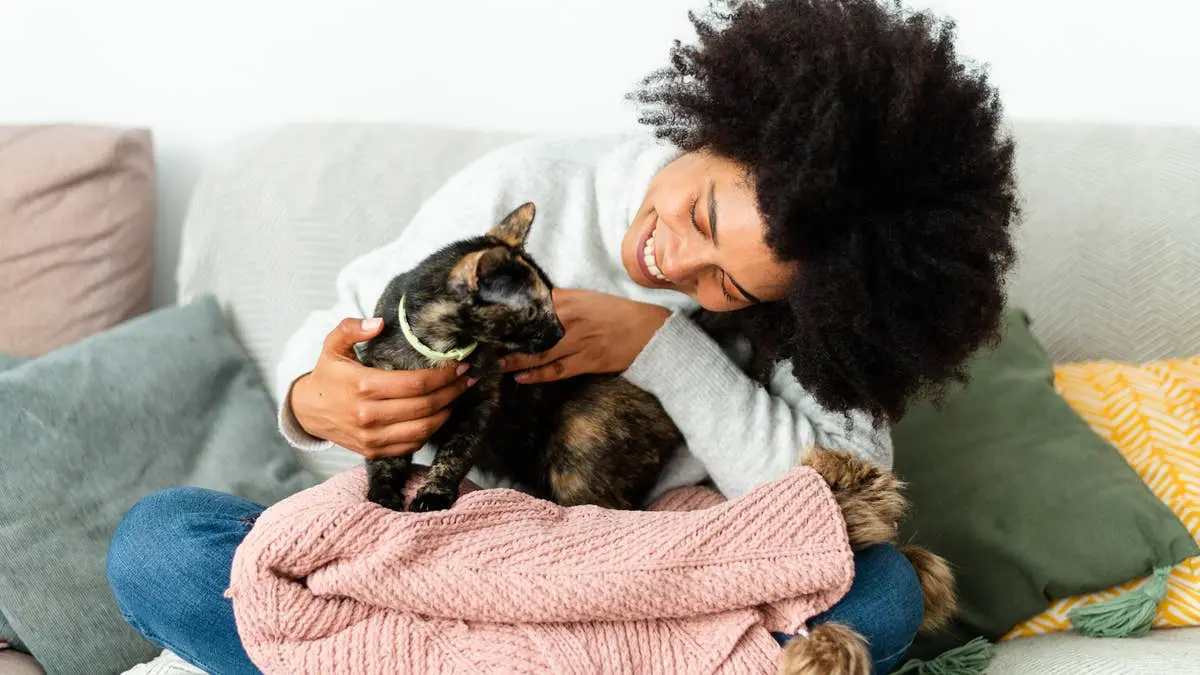
Cat Affection Unveiled: How Your Feline Shows Love Without Words
The Quiet Language of Cat Affection
A recent interview with feline behaviourist Dr. Elena Morales reveals that cats, often seen as aloof, actually communicate deep affection through subtle actions. The discussion took place at the International Cat Association conference in London, where experts gathered to share insights on pet-human bonds.
Latest news
 Rescue Dog Shows Gratitude to Every Person Helping Her Heal
 Family Adopts Terminally Ill St. Bernard After Her Human Passes Away
 Neighbors Take Action After Town Ignores Abused Dog
 Retired Firefighter Reunited with Lost Dogs During Live Interview
Cats exhibit love in ways that can be easily overlooked. A gentle headbutt, a quiet nap beside you, or a tail held high when you enter the room are all signs that your cat values your presence. These behaviours, according to Dr. Morales, stem from instinctual bonding patterns that evolved when cats lived with humans.
Dr. Morales explains that cats use scent and touch to mark their territory and signal trust. When a cat rubs its head against a person, it deposits pheromones that create a shared scent space, reinforcing attachment. „It’s a subtle declaration of belonging,” she says. In addition, a cat that chooses to sleep on your lap or in your bed is demonstrating comfort and safety, both key indicators of affection.
Why Do Cats Keep Their Feelings Low‑Profile?
Research from the University of Cambridge shows that cats who display these behaviours have higher levels of oxytocin, the hormone associated with bonding. The study found that even brief interactions, such as a gentle stroke, can raise oxytocin in both cat and owner, creating a positive feedback loop that strengthens the relationship.
Many pet owners misinterpret a cat’s independence as indifference. Dr. Morales points out that cats are naturally solitary hunters, so they have evolved to be self‑sufficient. However, when they trust a human, they will show affection in low‑key ways that fit their cautious nature. „A cat’s love is not a grand gesture,” she notes. „It’s a series of small, consistent actions that build over time.”
Owners often misread a cat’s aloofness as disinterest, but a flicking tail or a slow blink can be a sign of contentment. A slow blink, in particular, is a feline equivalent of a human smile, indicating that the cat feels safe and relaxed. „If you see your cat blinking slowly at you, it’s a clear sign of trust,” Dr. Morales advises.
How Can Owners Respond to These Subtle Signals?
Responding positively to a cat’s affectionate cues can deepen the bond. Owners should offer gentle petting, maintain eye contact, and provide a safe environment. „When you acknowledge a headbutt with a soft touch, you reinforce that the cat feels secure,” says Dr. Morales. Consistency is key; reacting calmly to a cat’s attempts to engage encourages more frequent displays of love.
Owners should also respect the cat’s need for space. If a cat retreats into a quiet corner, it may simply be recharging. „Respecting a cat’s boundaries shows that you understand their communication style,” Dr. Morales emphasizes.
Q1: What does it mean if my cat rubs its head against my leg? A1: The cat is marking you with its scent, signalling trust and affection. It’s a sign that you are part of its safe space.
Frequently Asked Questions
Q2: Why does my cat sometimes ignore me? A2: Cats are independent by nature. Ignoring you may simply mean they are busy hunting or resting. If they later seek your attention, they are still bonded.
Q3: How can I encourage my cat to show more affection? A3: Offer gentle strokes, talk softly, and give your cat time to approach you. Consistent, calm interactions reinforce trust and encourage affectionate behaviours.
These insights remind pet owners that feline love is often quiet and understated. By learning to read these gentle signals, owners can nurture a deeper, more rewarding relationship with their cats.