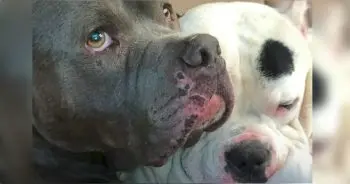
Pit Bull Reunites with Little Brother, Honors Deceased Dad Through Song
A Healing Bond Between Brothers
Two rescued pit bulls, Tonka and Little P, have been placed together in a permanent home after surviving a tragic hiking accident that claimed their father’s life. The incident occurred last spring in the Blue Ridge Mountains, where the trio’s owner, Kris, fell from a steep trail. Both dogs survived; Tonka suffered broken front legs, while Little P emerged unharmed. After weeks of separate foster care, the pair now live with a new family that is helping them heal and remember their lost dad.
Latest news
 Rescue Dog Shows Gratitude to Every Person Helping Her Heal
 Family Adopts Terminally Ill St. Bernard After Her Human Passes Away
 Neighbors Take Action After Town Ignores Abused Dog
 Retired Firefighter Reunited with Lost Dogs During Live Interview
The accident left Tonka immobilized, requiring surgery and months of rehabilitation. During his recovery, Little P stayed with a different foster family, where volunteers noted his protective behavior toward the injured sibling. Once Tonka’s fractures healed enough for limited movement, the two were reunited under the watchful eye of a local animal rescue group. Their new owners, a couple from Asheville, decided to honor the memory of the deceased father by recording a simple melody on their phone, letting the dogs hear a gentle tribute each evening.
The reunion proved more than a simple homecoming; it sparked a deepening bond that appears to aid both dogs’ emotional recovery. „When Tonka sees Little P, his tail starts wagging even before his legs can support him,” said Maya Greene, the rescue coordinator who facilitated the adoption. „It’s clear that the companionship is a crucial part of his therapy.” Little P, who has always been the more energetic of the pair, now spends his days nudging Tonka’s side, encouraging him to stand and walk. Observers say the dogs have begun to mimic each other’s movements, a behavior often seen in canine social learning.
Can Music Truly Aid Canine Recovery?
The tribute song, composed by the adoptive family’s teenage daughter, features soft acoustic guitar and a whispered chorus of „We miss you, Dad.” The recording is played at low volume while the dogs rest, creating a calm environment. „It’s our way of keeping his spirit present,” the daughter explained. The family reports that the dogs seem to respond positively, often resting their heads on each other during the melody.
Veterinarians and animal behaviorists have long debated the impact of music on pets. Recent studies suggest that soft, rhythmic tunes can lower heart rates and reduce stress in dogs. Dr. Luis Ortega, a veterinary neurologist, notes, „While we can’t claim the song cures physical injuries, it provides a soothing backdrop that may accelerate emotional healing.” In Tonka’s case, the combination of physical therapy, companionship, and auditory comfort appears to be working. He has progressed from assisted walks to short, unassisted strolls around the yard, a milestone his owners celebrate with a gentle pat and a fresh treat.
The story of Tonka and Little P highlights the resilience of animals facing trauma and the role humans can play in their rehabilitation. By offering a stable environment, consistent care, and even a heartfelt song, the new family has given the brothers a chance to thrive despite their loss.
Frequently Asked Questions
How long did Tonka’s recovery take before he could walk again? Tonka’s front leg fractures required surgical pins and six weeks of immobilization, followed by three months of gradual physiotherapy before he could take short, unassisted steps.
Is it common for dogs to respond to music? Research indicates that calm, low-frequency music can reduce anxiety in dogs, though individual reactions vary. Many owners report their pets appear more relaxed when soft melodies play.
What steps can other pet owners take to help traumatized dogs? Providing a safe, consistent routine, gentle physical therapy, and emotional enrichment—such as companionship or soothing sounds—can support both physical and mental recovery in injured pets.